

From Royalty to Stigma: The Transformative Journey of Paan in Indian Society
The storied history of paan in India reflects a fascinating trajectory from a symbol of elite sophistication to a practice often viewed with disdain. In the 18th century, art captured the essence of...

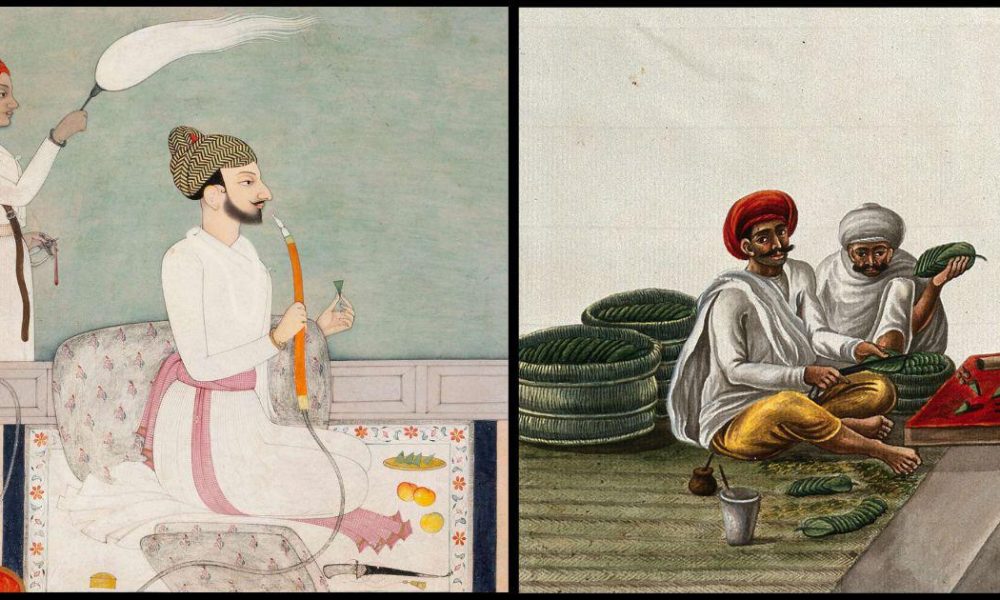
The storied history of paan in India reflects a fascinating trajectory from a symbol of elite sophistication to a practice often viewed with disdain. In the 18th century, art captured the essence of this cultural artifact, as illustrated in a portrait of an East India Company official. The painting, attributed to artist Dip Chand, subtly displays a pāndān – a container for betel leaves and condiments – alongside a spittoon, essential to the ritual of chewing paan.
In this depiction, the figure, likely William Fullerton, is depicted lounging on a lavishly adorned platform, surrounded by Indian attendants. The presence of a finely crafted hookah, a rosewater sprinkler, and aromatic preparations highlight the importance of paan in the social interactions of the time. Chewing paan was not merely a habit; it was an accepted part of elite decorum, perfectly integrated into gatherings that signified aristocratic culture.
Artworks from this period consistently portray paan paraphernalia—the betel box (pāndān), spittoon (pīkdān), and preparation tools—as integral to the elite lifestyle. This careful arrangement of objects reflects broader themes of social hierarchy and cultural exchange between Indian nobility and European visitors. As the British colonial presence expanded, European travelers expressed curiosity about local customs, including the rich rituals surrounding paan.
However, the narrative surrounding paan began to shift dramatically as colonial attitudes towards Indian practices evolved. What was once a signifier of status and tradition became marginalized, perceived as an unsanitary habit synonymous with the lower classes. This stigmatization illustrates how colonial perspectives altered cultural perceptions, contributing to a complex relationship with a historic practice.
Today, paan exists in a dual realm. While it still holds cultural significance in many communities, the stigma associated with it persists in urban spaces where cleanliness and modernity are prioritized. The journey of paan from a courtly indulgence to a socially contentious issue offers insight into the broader dynamics of colonialism, cultural identity, and the changing values within Indian society.
Source: scroll.in







No Comment! Be the first one.