

Supreme Court Orders Release of Students Detained During Protests Over Exam Irregularities
The Supreme Court of India has issued a directive compelling state governments to release students who were arrested or detained amidst the recent youth protests concerning alleged irregularities in...

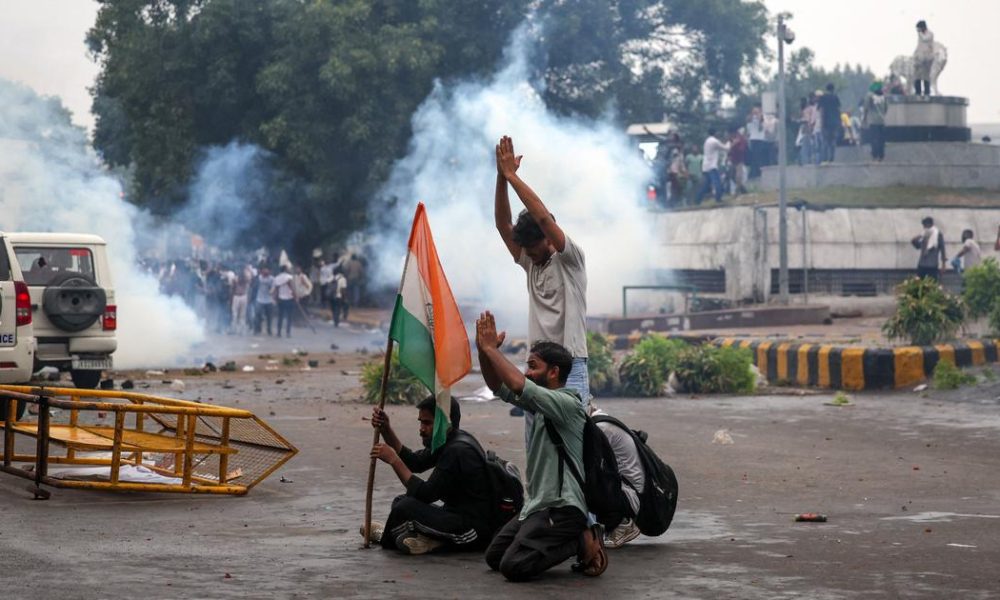
The Supreme Court of India has issued a directive compelling state governments to release students who were arrested or detained amidst the recent youth protests concerning alleged irregularities in competitive examinations. This significant ruling came on Tuesday, as a bench led by Chief Justice Surya Kant deliberated on a series of petitions highlighting police brutality against demonstrators in Delhi.
The protests, which took place on July 20, saw a significant mobilization of youth marching toward Parliament to voice their grievances. Reports indicate that law enforcement officials employed excessive force, including the use of lathis, tear gas, and pellet guns, to disperse the crowd, leading to several injuries among the protesters. The petitions presented to the Supreme Court detailed not only the events in Delhi but also instances of heavy-handed police tactics in Bihar, where demonstrators were reportedly subjected to violence even while expressing solidarity with their counterparts in the capital.
In a particularly concerning incident over the weekend, three individuals were injured when police opened fire on protestors in Siwan district of Bihar, prompting widespread outrage and calls for accountability. In response to these incidents, the petitions filed in the Supreme Court sought the establishment of comprehensive guidelines to govern police conduct during public demonstrations, with specific emphasis on preventing the deployment of plainclothes officers in crowd-control scenarios.
Moreover, the petitioners advocated for the court to provide a framework for regulating the enforcement of prohibitory orders under Section 163 of the Bharatiya Nagarik Suraksha Sanhita. This legal provision empowers authorities to issue directives in urgent cases of perceived threats or public disturbance, a power that has been criticized for potential misuse during protests. The overarching aim of the petitions is to ensure that the rights of individuals participating in peaceful demonstrations are protected and that necessary safeguards are in place to prevent unwarranted violence.
This ruling marks a pivotal moment in the ongoing discourse surrounding the treatment of protestors in India, particularly when youth are at the forefront of demanding accountability and transparency in governmental processes. As the Supreme Court continues to evaluate the implications of police actions during such events, advocates hope that this will lead to a more balanced approach that respects civil liberties while maintaining public order.
Source: scroll.in







No Comment! Be the first one.