

India Asserts No Third-Party Role in Nepal Border Dispute Following PM’s Remarks
The Ministry of External Affairs (MEA) of India firmly stated on Tuesday that there is no place for any third-party involvement in the ongoing bilateral issues regarding the border between India and...

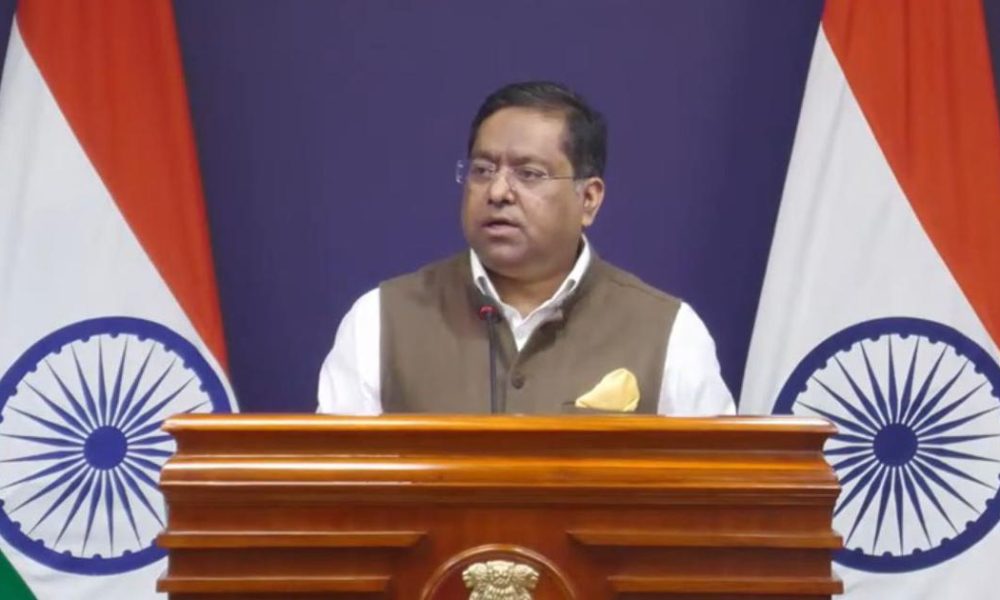
The Ministry of External Affairs (MEA) of India firmly stated on Tuesday that there is no place for any third-party involvement in the ongoing bilateral issues regarding the border between India and Nepal. The comments were made by MEA spokesperson Randhir Jaiswal in response to remarks made by Nepal’s Prime Minister Balendra Shah, who indicated that Kathmandu had engaged in talks with China and the United Kingdom concerning the disputed Kalapani-Limpiadhura-Lipulekh region.
India has consistently maintained that this territory falls within Uttarakhand. The MEA’s response underscores India’s stance against external interference in what it considers a bilateral matter. Jaiswal reiterated that nearly 98% of the India-Nepal border has been accurately demarcated, with only a few segments remaining unresolved. He attributed some of these issues to natural changes, such as the shifting course of the Gandak River.
Addressing the complexities of the border situation, Jaiswal explained that there are also ongoing issues related to cross-border occupation and encroachments within designated no man’s land areas. These matters, he noted, are currently being jointly assessed by both nations. The Indian government emphasizes the importance of bilateral mechanisms that have been established to address all aspects of border disputes.
In light of the recent discussions, Jaiswal highlighted the necessity for clarity among all parties involved: “It should be clear to all concerned that there is no role for any third parties in a bilateral matter between India and Nepal.” This assertion is aimed at reinforcing India’s commitment to resolving disputes directly with Nepal, without external influence.
The history of the India-Nepal border dispute is deeply rooted in colonial legacies and has seen several escalations over the years. The latest tensions were exacerbated by Nepal’s issuance of a new political map in 2019 that included the contested regions. This has sparked ongoing discussions about national sovereignty and territorial integrity on both sides, making it crucial for both governments to engage in constructive dialogue moving forward.
Source: scroll.in







No Comment! Be the first one.