

US Supreme Court Affirms Birthright Citizenship, Upholding Constitutional Equality
In a landmark judgment on June 30, 2026, the Supreme Court of the United States reaffirmed the principle of universal birthright citizenship, which is enshrined in the citizenship clause of the 14th...

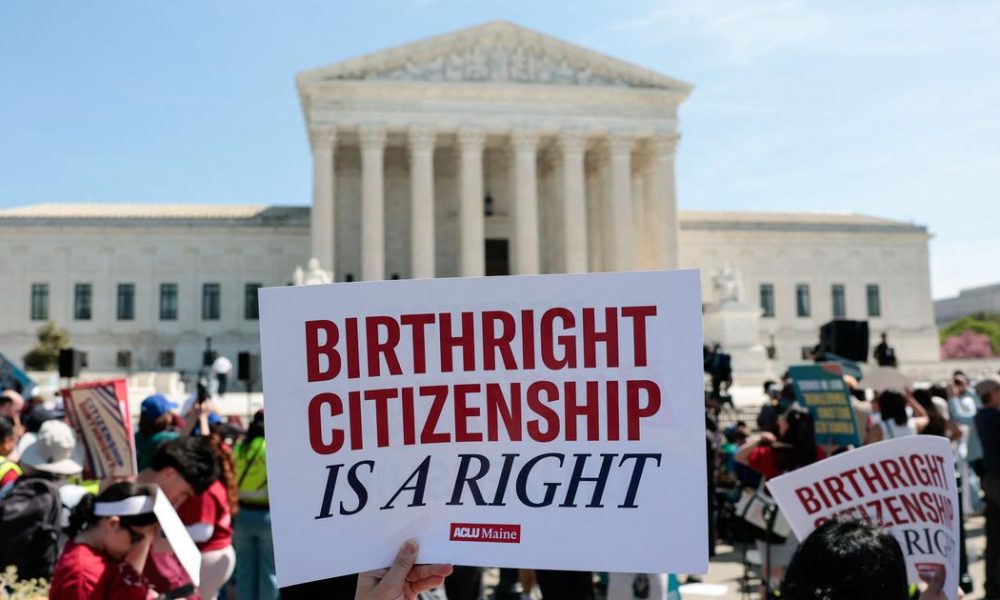
In a landmark judgment on June 30, 2026, the Supreme Court of the United States reaffirmed the principle of universal birthright citizenship, which is enshrined in the citizenship clause of the 14th Amendment to the US Constitution. This ruling ensures that nearly every child born within the United States automatically acquires American citizenship, irrespective of their parents’ immigration status. The decision notably overturns an executive order issued by former President Donald Trump at the onset of his second term, which sought to revoke birthright citizenship for children of undocumented immigrants and temporary visitors.
The Court’s ruling reflected a narrow but significant 5-4 split regarding the interpretation of the 14th Amendment. Notably, Justice Brett Kavanaugh sided against the Trump administration’s directive, asserting that while it contravened federal law—which Congress has the authority to amend—it did not infringe upon the Constitution itself. This nuanced view effectively shifted the final tally to 6-3 against the Trump order, as two justices traditionally aligned with conservative ideologies, Chief Justice John Roberts and Justice Amy Coney Barrett, chose to side with the liberal justices.
Observers of the Supreme Court expected the liberal justices—Ketanji Brown Jackson, Elena Kagan, and Sonia Sotomayor—to advocate for universal birthright citizenship. However, the decision’s outcome was bolstered by the unexpected alliance of certain conservative justices who interpreted the original intent of the 14th Amendment as fundamentally safeguarding the citizenship rights of former slaves and their descendants, rather than limiting citizenship based on the circumstances of birth.
This ruling stands as a critical affirmation of equality and inclusivity within the American legal framework. It reinforces the notion that citizenship is a birthright that transcends the complexities of immigration status and reflects the foundational values of the United States as a nation built on the principles of liberty and equality for all. The Supreme Court’s decision could have far-reaching implications, shaping discussions around immigration policy and citizenship rights not only in the United States but potentially resonating within the global discourse on human rights.
As countries like India continue to grapple with their own immigration challenges and citizenship laws, the Supreme Court’s ruling serves as a reminder of the ongoing debates surrounding identity, belonging, and the rights of individuals born in a nation, regardless of their parents’ status. This case adds a significant chapter to the ongoing narrative of citizenship, prompting both legal experts and the general public to reflect on the values that underpin modern citizenship and national identity.
Source: scroll.in







No Comment! Be the first one.