

Tamil Nadu Assembly Passes Resolution Opposing Karnataka’s Mekedatu Dam Project
The Tamil Nadu Assembly has taken a notable stance against the Karnataka government’s proposed Mekedatu dam project by unanimously passing a resolution in its recent session. Chief Minister...

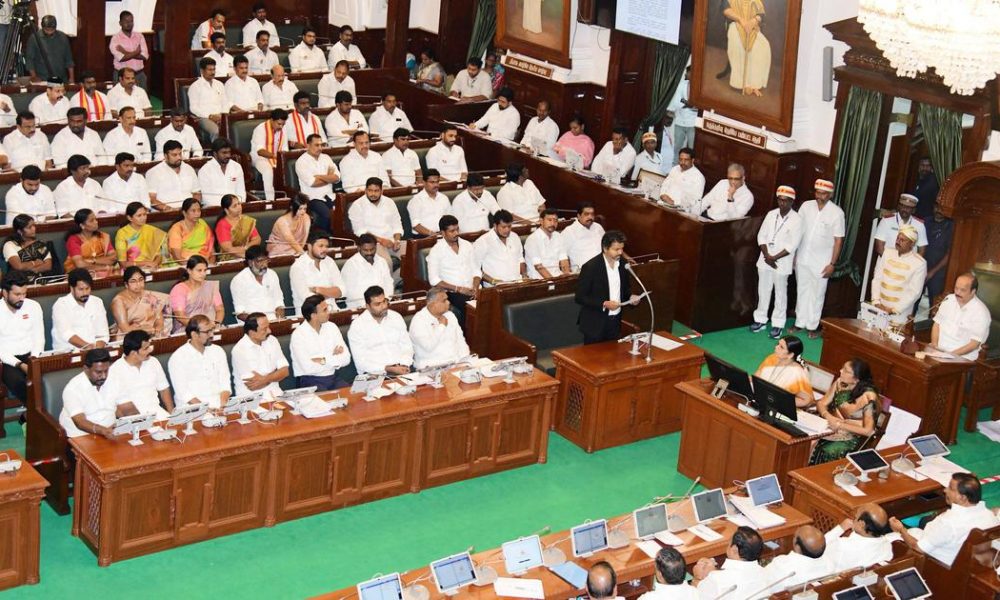
The Tamil Nadu Assembly has taken a notable stance against the Karnataka government’s proposed Mekedatu dam project by unanimously passing a resolution in its recent session. Chief Minister M.K. Stalin initiated the resolution, emphasizing the Assembly’s objection to what it regarded as Karnataka’s “unilateral attempt” to construct the dam without adhering to the water-sharing agreement established by the Cauvery Water Disputes Tribunal in 2007 and the subsequent Supreme Court ruling in 2018.
The Mekedatu project, situated at the confluence of the Cauvery river and its tributary Arkavathi in the Ramanagara district of Karnataka, aims to create a reservoir. The initiative is primarily intended to supply drinking water to Bengaluru and its surrounding areas, along with generating an estimated 400 megawatts of electricity. The total cost of the project is projected to be around Rs 9,000 crore.
Tamil Nadu officials are concerned that the construction of the dam could significantly disrupt the natural flow of water from the Cauvery river into their state. The long-standing debate over the distribution of water from the Cauvery has been a source of contention between Tamil Nadu and Karnataka, dating back to agreements signed in 1892 and 1924 between the Madras Presidency and the princely state of Mysore. The issue has seen multiple interventions, including the establishment of a dedicated tribunal by the Union government in 1990 to address the escalating disputes, which culminated in a verdict in 2007 allocating specific water quotas to both states.
In light of this history, Tamil Nadu’s Assembly resolution is not merely a reactionary move but rather reflects deep-seated grievances regarding water rights and resource management in the region. The Cauvery river is not only a vital water source for agriculture and drinking needs but also a cultural lifeline for millions of people across both states. The ongoing tensions could escalate further, as this resolution may lead to more stringent political and legal challenges to Karnataka’s plans.
As the Mekedatu dam project moves forward in Karnataka, the implications of this resolution highlight the complexities of inter-state water disputes in India, where multiple stakeholders are affected by decisions made at administrative levels. Both states will need to engage in dialogue to address these critical issues while working towards sustainable solutions that respect the interests of all parties involved.
Source: scroll.in




No Comment! Be the first one.