

Revisiting Akbar: The Mughal Emperor’s Legacy of Secularism Under Scrutiny
In recent years, the legacy of Mughal Emperor Akbar has emerged as a contentious topic within the landscape of Indian historical discourse. As debates intensify, particularly among advocates of...

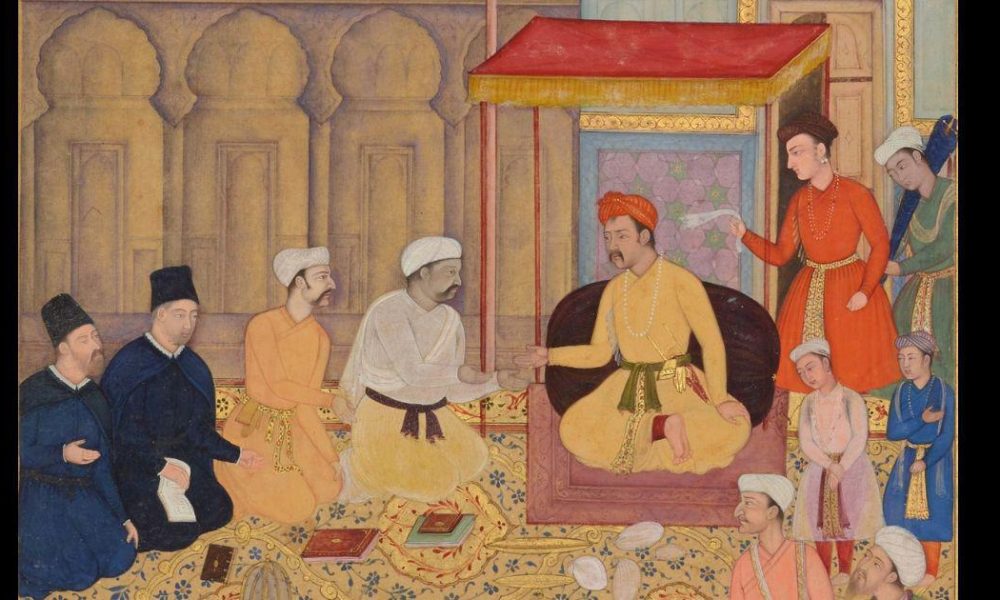
In recent years, the legacy of Mughal Emperor Akbar has emerged as a contentious topic within the landscape of Indian historical discourse. As debates intensify, particularly among advocates of Hindutva narratives, Akbar’s reign is increasingly depicted as a time of religious oppression and cultural estrangement. This revisionist perspective often casts Akbar in two divergent lights: either as a cunning ruler whose tolerance was merely a façade for imperial ambitions or as an anomaly among Muslim leaders, whose policies are falsely taken as reflections of a broader intolerance.
Notably, voices such as historian Vikram Sampath have reignited discussions questioning the authenticity and significance of Akbar’s famed inclusivism. Drawing upon a long-standing tradition of critical historical interpretation, Sampath and others argue that Akbar’s policies were less about genuine philosophical commitments and more about political pragmatism. This viewpoint has gained traction, particularly following public discussions on platforms like NDTV, where the complexities of Akbar’s policies are debated in a contemporary context.
However, this perspective risks oversimplifying Akbar’s multifaceted historical role. It is indisputable that Akbar was a formidable empire builder, and his governance was undoubtedly influenced by political strategy. Yet, this characterization is applicable to many successful leaders throughout history. The critical inquiry should not solely focus on whether Akbar’s policies were politically motivated, but rather on the nature of those policies and their impact on the fabric of Indian society during his reign.
Akbar, who ruled from 1556 to 1605, is famously known for his attempts to foster an environment of religious tolerance and cultural syncretism. His establishment of the Din-i Ilahi, a syncretic religion, and the abolition of the jizya tax on non-Muslims are often highlighted as evidence of his commitment to inclusivity. Yet, the critique by modern historians raises essential questions about whether these actions were driven by a genuine belief in secularism or were merely tactics to solidify his power and control over a diverse empire.
In examining Akbar’s legacy, it becomes crucial to understand the socio-political context of the Mughal era. His reign was marked by a blend of military conquests, administrative reforms, and cultural patronage that sought to integrate various religious communities. This complexity challenges the binary narratives that seek to label him as either a secular icon or a political opportunist. As discussions about Akbar continue to evolve, they reflect broader questions about the interpretation of Indian history and the values we ascribe to our past leaders.
Source: scroll.in







No Comment! Be the first one.