

Growing Older, Growing Alone: The Silent Struggle of India’s Elderly
Growing Older, Growing Alone: The Silent Struggle of India’s Elderly Every morning, 72-year-old Shanti Devi begins her day the same way. She waters the plants on her balcony, prepares a cup of tea,...

Growing Older, Growing Alone: The Silent Struggle of India’s Elderly
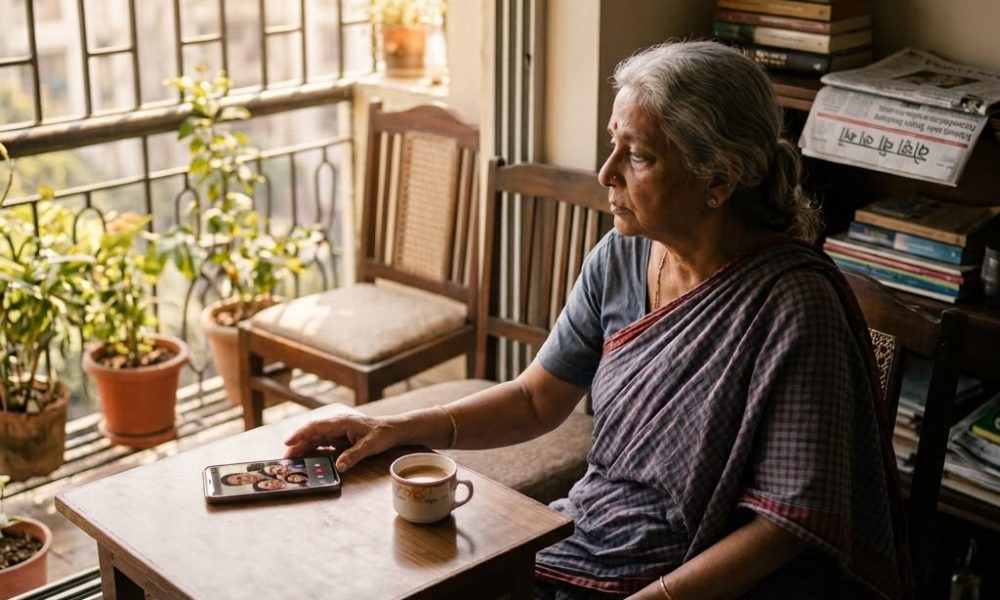
Every morning, 72-year-old Shanti Devi begins her day the same way. She waters the plants on her balcony, prepares a cup of tea, and waits for the phone to ring.
Her children live overseas, pursuing successful careers and raising families of their own. They call her regularly, check on her health, and ensure that her financial needs are met. Yet when the conversation ends and the house falls silent once again, a familiar feeling returns.
“It’s not that I am alone,” she says softly. “It’s that I miss having people around me.”
Shanti Devi’s story is becoming increasingly common across India.
As the country embraces rapid urbanization, technological advancement, and economic growth, a growing number of senior citizens are facing a challenge that often remains hidden behind closed doors: loneliness.
It is a quiet struggle, rarely discussed openly, yet deeply felt by millions of elderly Indians who find themselves navigating old age with fewer companions, fewer social interactions, and an increasing sense of isolation.
The Changing Face of Family Life
For generations, India was known for its strong family structure.
Multi-generational households were common. Grandparents lived with their children and grandchildren, actively participating in daily family life. They shared stories, offered guidance, cared for younger family members, and remained deeply connected to their communities.
Old age was often viewed as a stage of life surrounded by family.
Today, however, the realities of modern life are reshaping these traditions.
Young people are moving away from their hometowns in pursuit of higher education, employment opportunities, and better living standards. Some relocate to major cities, while others settle abroad. Nuclear families have become increasingly common, and geographic distances between generations continue to grow.
While these changes have opened doors to economic and professional opportunities, they have also created emotional gaps that are becoming harder to bridge.
Many elderly parents now live alone, sometimes by choice, but often because circumstances leave few alternatives.
Their children remain connected through phone calls, video chats, and messaging applications. Yet technology, despite its benefits, cannot always replace the warmth of physical presence.
A video call can show a smiling face.
It cannot offer a comforting hug.
The Loneliness We Cannot See
One of the greatest challenges surrounding elderly loneliness is that it is often invisible.
Many senior citizens continue to carry out their daily routines. They visit markets, attend religious gatherings, greet neighbors, and maintain an outward appearance of normalcy. To those around them, everything may seem fine.
Yet beneath the surface, feelings of isolation can quietly grow.
Retirement often removes daily social interactions that once provided purpose and routine. Friends may relocate, become less active, or pass away. Physical health limitations can make it difficult to participate in community activities.
For some, the loss of a spouse creates an emotional void that no amount of activity can fully replace.
Days that were once filled with conversation and companionship can become increasingly silent.
And silence, when prolonged, can be difficult to bear.
More Than an Emotional Issue
Loneliness is often dismissed as a natural part of aging. Experts argue that this perception is both inaccurate and dangerous.
Research from around the world has shown that prolonged social isolation can have serious consequences for both physical and mental health.
Studies have linked chronic loneliness to depression, anxiety, cognitive decline, sleep disturbances, high blood pressure, weakened immunity, and an increased risk of chronic illnesses.
Some health experts even suggest that the effects of long-term loneliness can be comparable to other significant health risks.
Human beings are inherently social creatures. Meaningful relationships and emotional connections are not luxuries; they are essential components of well-being throughout life.
This need does not diminish with age.
If anything, it becomes even more important.
When Living Together Isn’t Enough
Loneliness is not limited to elderly individuals who live alone.
Many senior citizens who share homes with family members also report feelings of isolation.
Modern lifestyles have introduced new challenges within households. Work schedules are longer and more demanding. Children and teenagers spend increasing amounts of time on digital devices. Family members often occupy the same physical space while remaining emotionally disconnected.
An elderly parent may sit in a room full of relatives yet still feel excluded from conversations, decisions, and daily interactions.
Experts note that loneliness is not simply the absence of people.
It is the absence of meaningful connection.
For many older adults, being heard, respected, and included matters far more than physical proximity.
The Digital Divide
Technology has become one of the defining features of modern life.
Video calls, messaging apps, social media platforms, and online communities have made it possible for families to remain connected across continents.
For many elderly individuals, these tools have been a blessing.
Grandparents can watch grandchildren grow up through video calls. Family photographs can be shared instantly. Important conversations no longer require weeks of waiting for a letter to arrive.
Yet technology also presents challenges.
Many senior citizens struggle with digital literacy, making it difficult to navigate smartphones, applications, and online platforms. Some feel overwhelmed by rapidly changing technology, while others simply lack access to reliable internet services.
As more aspects of social life move online, those who cannot fully participate may feel even more disconnected.
The digital revolution has connected millions—but not everyone equally.
Building Communities, Restoring Connections
Across India, communities and organizations are working to address the growing issue of elderly loneliness.
Senior citizen clubs, cultural associations, volunteer groups, and community centers are creating spaces where older adults can socialize, learn new skills, and build meaningful friendships.
Many cities have introduced programs that promote active aging through fitness activities, hobby classes, educational workshops, and cultural events.
These initiatives provide far more than entertainment.
They offer companionship.
They provide purpose.
They remind older adults that they remain valued members of society.
For many participants, these communities become a second family.
The Power of Small Gestures
Experts consistently emphasize that addressing loneliness does not always require large-scale interventions.
Sometimes, the most meaningful solutions are surprisingly simple.
A visit from a family member.
A shared meal.
A genuine conversation.
An invitation to participate in family decisions.
A few minutes spent listening without distraction.
These small acts communicate something every human being needs to hear: You matter.
Many elderly individuals are not seeking financial support or material assistance.
They are seeking connection.
They want to feel remembered, respected, and included.
And often, the difference between loneliness and belonging can be found in the simplest gestures.
Preparing for an Aging India
India’s elderly population is expected to grow significantly in the coming decades.
Advances in healthcare and rising life expectancy mean that more people will live longer than ever before. While this represents a remarkable achievement, it also brings new social responsibilities.
Policymakers, healthcare providers, community organizations, and families must work together to ensure that aging populations receive not only medical care but also emotional and social support.
Creating age-friendly communities, improving access to social programs, expanding mental health services, and promoting intergenerational engagement will be essential in the years ahead.
The challenge is not merely helping people live longer.
It is helping them live well.
A Measure of Society
The true measure of a society is often reflected in how it treats those who can no longer contribute through economic productivity alone.
As India continues its journey toward progress and modernization, it faces an important question:
Can a nation become more technologically advanced while remaining deeply human?
For millions of elderly citizens, the greatest challenge is not financial hardship or declining health.
It is the quiet feeling of being forgotten.
Addressing that loneliness is not simply a family responsibility or a healthcare concern. It is a social responsibility that belongs to all of us.
Because no one should spend their later years feeling invisible.
And because growing older should never have to mean growing alone.







No Comment! Be the first one.