

Exploring the Cosmic Connection: Nataraja’s Statue at CERN
The presence of a six-and-a-half-foot tall bronze statue of Nataraja, a manifestation of Lord Shiva, at the European Organisation for Nuclear Research (CERN) has intrigued many observers. Questions...

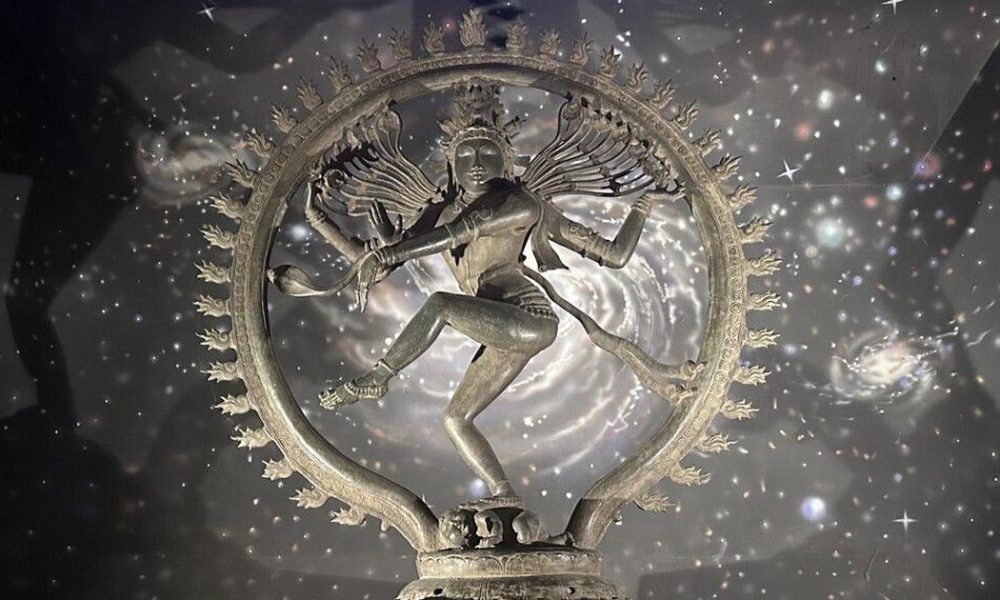
The presence of a six-and-a-half-foot tall bronze statue of Nataraja, a manifestation of Lord Shiva, at the European Organisation for Nuclear Research (CERN) has intrigued many observers. Questions often arise, particularly on social media, regarding the appropriateness of having an Indian deity in a European scientific institution. The official response from CERN clarifies that the statue was a gift from the Indian government, symbolizing the parallels drawn between Nataraja’s cosmic dance and the intricate movements of subatomic particles studied in modern physics.
The statue has been part of CERN since 2004, but the connection between the Nataraja figure and scientific discourse extends far beyond its installation. Nataraja emerged as a potent symbol of India’s rich cultural heritage and intellectual depth during the early 20th century. This rise in prominence is often attributed to the influential art historian Ananda Coomaraswamy, whose essay, ‘The Dance of Siva,’ published in 1912, articulated a philosophical understanding of Indian art that resonated with the nationalist sentiments of the time.
As the statue gained international recognition, its significance was further amplified through works like ‘The Tao of Physics’ by physicist Fritjof Capra. This bestselling book, which sought to bridge Eastern philosophy and Western scientific thought, highlighted the parallels between the philosophical underpinnings of quantum physics and the cosmic dance of Shiva. The idea of interconnectedness between the spiritual and the scientific continues to draw interest and provoke thought among scholars and enthusiasts alike.
The Nataraja statue not only represents a blend of art and science but also serves as a reminder of India’s enduring legacy in global intellectual history. Its portrayal of Shiva with one leg raised, and the other bent, encapsulates the dynamic nature of existence, mirroring the ever-changing universe studied by physicists. This iconic image invites contemplation, urging viewers to reflect on the deeper meanings of both life and scientific inquiry.
In a world increasingly fascinated by the intersections of culture and science, the Nataraja at CERN stands as a testament to the enduring influence of Indian heritage in contemporary global dialogues. As we explore the universe at a subatomic level, perhaps it is fitting to recognize the cultural narratives that have shaped our understanding of existence itself.
Source: scroll.in







No Comment! Be the first one.