

Unveiling the Tensions Leading to the 1986 Mizo Peace Accord: A New Book’s Insight
In early June 1986, the political climate in India was fraught with tension, particularly in Mizoram, where a long-standing conflict had reached a crucial juncture. Lalkhama, the chief secretary of...

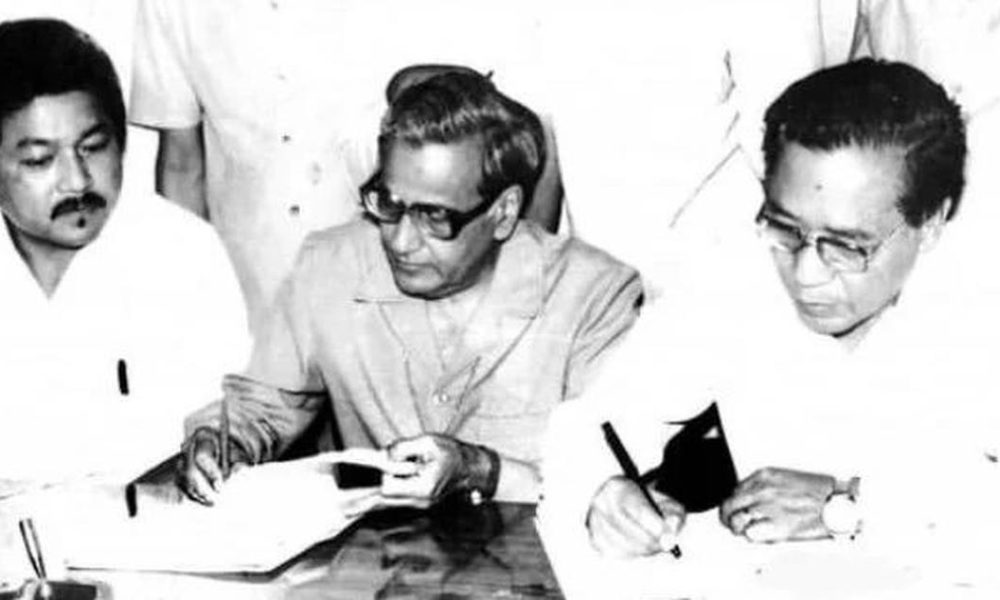
In early June 1986, the political climate in India was fraught with tension, particularly in Mizoram, where a long-standing conflict had reached a crucial juncture. Lalkhama, the chief secretary of Mizoram, received an unexpected summons from Delhi that would alter the course of the state’s future. The meeting with the Home Secretary revealed that an agreement with the Mizo National Front (MNF) was imminent, and Lalkhama was expected to endorse it without prior knowledge of its terms.
Lalkhama, taken aback by the sudden push for his signature, raised concerns about the lack of transparency in the negotiations. He emphasized that Mizoram had not been adequately informed about the discussions taking place in the capital, questioning how he could sign a significant document without fully understanding its implications. However, the Home Secretary was insistent, underscoring the urgency of finalizing the agreement before the imminent retirement of RD Pradhan, an important bureaucrat involved in the negotiations.
As the days progressed in the sweltering heat of June, with temperatures soaring dangerously close to 45°C in Delhi, the pressure mounted. It was evident that this settlement was unlike any before; it was both tantalizingly close and exasperatingly distant. Recognizing the critical nature of the situation, Lalkhama proposed that the Chief Minister be included in the ongoing discussions to ensure that the state’s interests were adequately represented.
At the behest of then-Prime Minister Rajiv Gandhi, Laldenga, the first Chief Minister of the newly federated state of Mizoram, was brought into the fold. He connected with Arjun Singh, the Congress party’s vice-president and a key negotiator for the government. Together, they crafted a political framework that would usher in a coalition government comprising the MNF and Congress, with Laldenga at its helm.
This pivotal moment marked a significant turning point in the history of Mizoram, leading to the 1986 Mizo Peace Accord, which granted statehood to the region and aimed to address the grievances of the Mizo people. The book detailing these events encapsulates not only the intricate political maneuvers but also the human emotions and stakes involved, offering readers a comprehensive view of the tensions that shaped modern Mizoram.
Source: scroll.in







No Comment! Be the first one.