

Former Supreme Court Justice Critiques MEA’s Definition of Passport as Solely a Travel Document
In a significant discourse on the legal status of passports in India, former Supreme Court Justice Madan B Lokur has challenged the Ministry of External Affairs’ (MEA) assertion that passports...

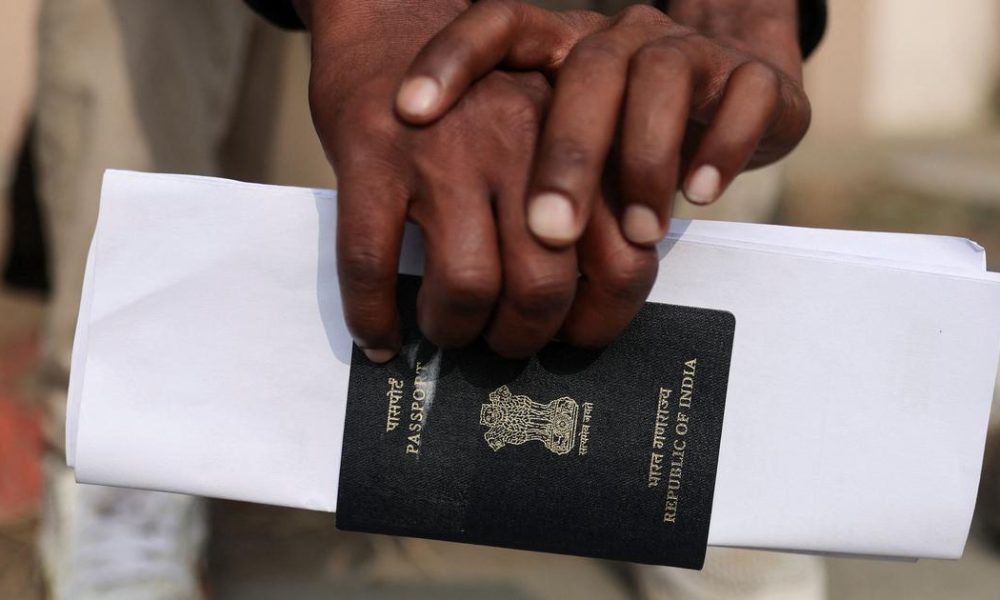
In a significant discourse on the legal status of passports in India, former Supreme Court Justice Madan B Lokur has challenged the Ministry of External Affairs’ (MEA) assertion that passports serve merely as travel documents and do not substantiate Indian citizenship. Speaking at an event in New Delhi, Lokur characterized the MEA’s interpretation as a profound misinterpretation of the law, which could have serious constitutional ramifications.
Justice Lokur emphasized that the Passports Act of 1967 distinctly differentiates between the terms ‘passport’ and ‘travel document.’ He pointed out that the Act was formulated not solely to manage travel, but also to regulate the issuance of passports and travel documents for citizens and other individuals departing from India. This distinction, according to him, is not mere semantic nuance; it carries significant legal weight.
During his address, Lokur referenced the preamble of the Passports Act, which explicitly states its purpose is to provide a framework for issuing both passports and travel documents. He remarked, “Parliament does not engage in drafting laws with extraneous language or meaningless phrases.” By using the two terms separately throughout the legislation, lawmakers intended to convey that they refer to different types of documents.
Moreover, Lokur asserted that the classification of a passport as simply a travel document undermines its role as a proof of citizenship. He argued that holding an Indian passport inherently attests to a person’s citizenship. Highlighting the potential legal confusion this interpretation may cause, he called for a clear reaffirmation of the legal position regarding the status of passports in India.
This debate comes at a time when the relationship between citizenship and documentation is under scrutiny in various global contexts. Lokur’s remarks urge a reconsideration of how legal frameworks define the relationship between citizenship and travel, particularly in India where identity documentation plays a crucial role in governance and civic rights.
Source: scroll.in







No Comment! Be the first one.