

Exploring the Vibrant World of Pigments: An Insightful Interview with Narayan Khandekar
In the realm of art, colour plays a pivotal role, a notion that Narayan Khandekar, a prominent pigment specialist, passionately advocates. He often cites the ancient Lascaux caves in France, renowned...

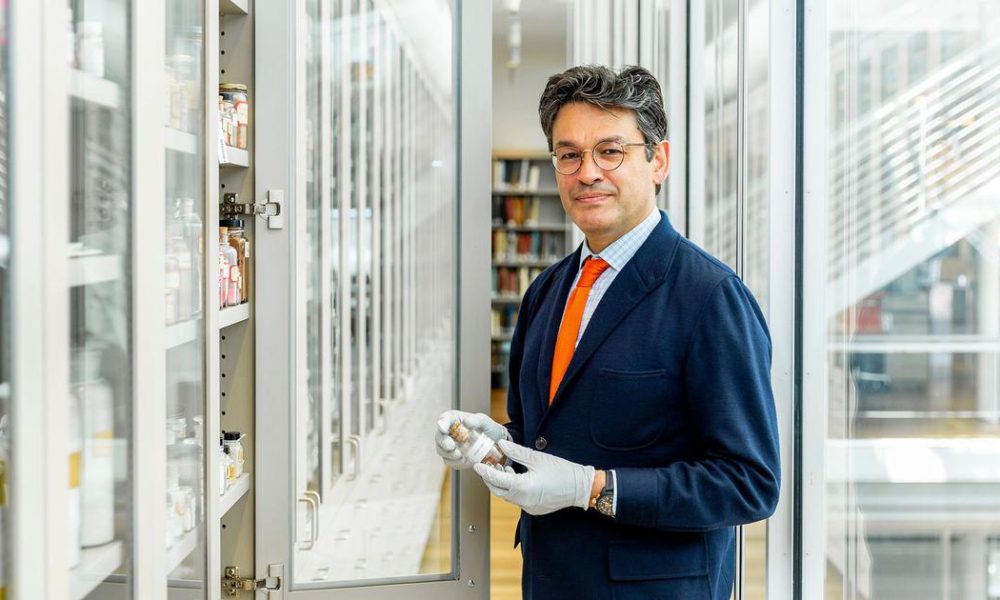
In the realm of art, colour plays a pivotal role, a notion that Narayan Khandekar, a prominent pigment specialist, passionately advocates. He often cites the ancient Lascaux caves in France, renowned as the ‘Sistine Chapel of Prehistoric Art,’ as a key illustration of his belief. The early humans who adorned these cave walls with vivid images of hunted animals, despite facing the harsh realities of survival, demonstrate an inherent desire to express themselves through colours derived from natural ochres. This remarkable creativity, exhibited over 17,000 years ago, showcases the deep-rooted connection between art and human experience.
Khandekar, who currently manages the Forbes Pigment Collection at the Harvard Art Museum’s Straus Center for Conservation and Technical Studies, is at the forefront of understanding this relationship. His collection, which boasts over 3,000 pigments, serves as a testament to human creativity, cultural exchange, and scientific advancement. This assembly of pigments is not simply an archive of colours; it is a narrative of our quest for new materials and the evolution of artistic expression throughout history.
During a recent conversation in chilly New England, Khandekar shared insights on how the Lascaux ochre, a significant piece in his collection, made its way there after many years. This ochre caught the attention of many when the Harvard Art Museums reopened in 2014, bringing the pigments into the public eye through various media outlets, including The New Yorker and CNN. The renewed interest sparked by these stories led to an artist in California, among others, reaching out to Khandekar, keen to learn more about this extraordinary pigment.
The journey of pigments reflects broader themes of innovation and globalization, illustrating how materials travel across cultures and epochs. Khandekar’s expertise not only encapsulates the scientific aspects of pigments but also delves into the cultural significance they hold. Each pigment in the collection not only has its own story but also represents the interconnectedness of humanity through trade and cultural exchange.
As Khandekar continues to curate and expand this impressive collection, he remains committed to the idea that art transcends mere decoration; it is a necessary expression of human existence, as vital as the colours that make it come alive. His work reinforces the notion that colour is not just an aesthetic choice but a fundamental aspect of our shared history and identity.
Source: scroll.in







No Comment! Be the first one.