

US Supreme Court Affirms Birthright Citizenship, Overturns Trump’s Controversial Executive Order
The United States Supreme Court delivered a significant ruling on Tuesday, affirming the principle of birthright citizenship and nullifying an executive order issued by former President Donald Trump....

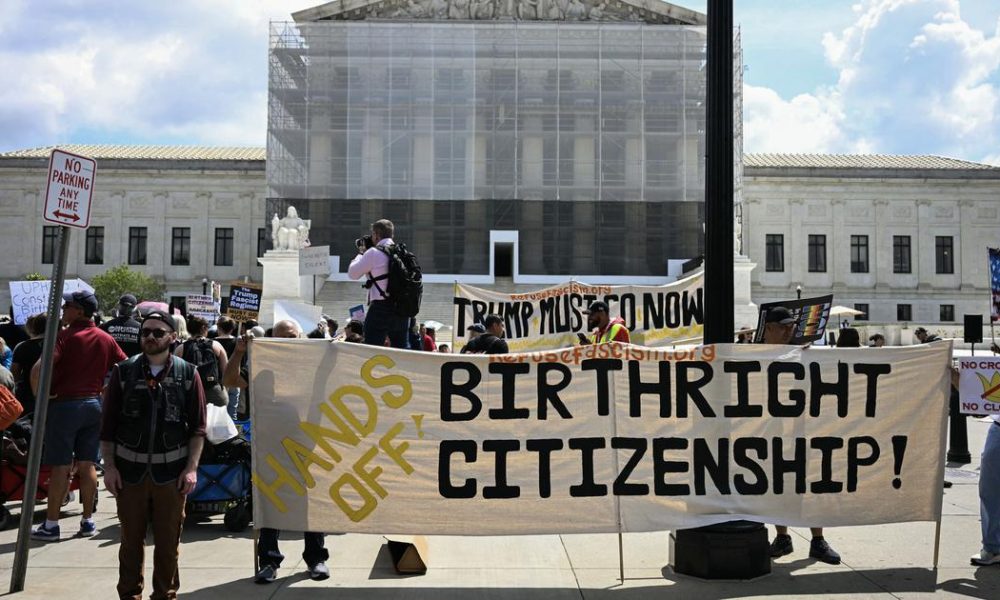
The United States Supreme Court delivered a significant ruling on Tuesday, affirming the principle of birthright citizenship and nullifying an executive order issued by former President Donald Trump. In a decisive 6-3 decision, the Court upheld that nearly all individuals born on American soil are entitled to US citizenship, a fundamental right enshrined in the 14th Amendment of the US Constitution.
Trump’s executive order, which was enacted on January 20, the very first day of his second term, aimed to revoke the automatic citizenship granted to children born in the US to parents residing in the country illegally or on temporary visas. This controversial move had sparked widespread debate and legal challenges, leading to intervention from lower courts that halted its implementation.
The legal contention revolved around the interpretation of the 14th Amendment, which explicitly states that all individuals born or naturalized in the United States and subject to its jurisdiction are citizens. The Supreme Court’s ruling reinforced this understanding, with Chief Justice John Roberts articulating that children born on US territory to parents who are unlawfully present are indeed “subject to the jurisdiction” of the United States and thus citizens at birth.
This ruling is particularly significant, as it not only protects the rights of children born in the US to undocumented immigrants but also affirms the long-standing legal precedent that has defined American citizenship for over a century. The decision serves as a reminder of the enduring principles of equality and justice that are central to the American legal framework.
In the backdrop of ongoing discussions about immigration policies in the US, this ruling could have far-reaching implications. It reflects the ongoing struggle between differing political ideologies regarding immigration and the rights of individuals, particularly children, in a country that prides itself on being a melting pot of cultures. As India navigates its own discussions around citizenship and immigration, the US Supreme Court’s decision serves as a pivotal moment that underscores the importance of legal interpretation in shaping national identity and individual rights.
Source: scroll.in







No Comment! Be the first one.