

Kamakhya Temple: The Sacred Center of Tantric Worship and the Mysterious Story of One of India’s Most Powerful Shakti Peethas
Guwahati, Assam Perched atop the Nilachal Hill in Guwahati, Assam, the Kamakhya Temple is one of India’s most revered and mysterious Hindu pilgrimage sites. Dedicated to Goddess Kamakhya, the...

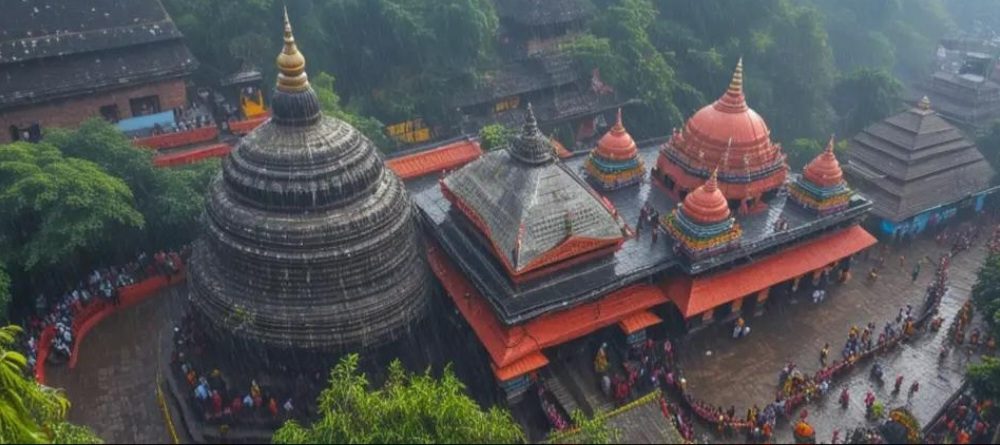
Guwahati, Assam
Perched atop the Nilachal Hill in Guwahati, Assam, the Kamakhya Temple is one of India’s most revered and mysterious Hindu pilgrimage sites. Dedicated to Goddess Kamakhya, the temple is regarded as the foremost center of Tantric worship, attracting millions of devotees, saints, tantric practitioners, scholars, and spiritual seekers from across India and around the world each year.
The temple is especially famous for the Ambubachi Mela, one of India’s largest religious festivals. According to traditional belief, Goddess Kamakhya undergoes her annual menstrual cycle during this period. As a result, the temple remains closed for three days, symbolizing the Goddess’s seclusion. On the fourth day, the temple reopens with special prayers and elaborate religious rituals. Thousands of devotees gather to receive the sacred red cloth (Rakta Bastra), believed to carry the blessings of the Goddess.
The Legend of Sati and the Origin of Kamakhya
According to Hindu mythology, the Kamakhya Temple is deeply connected with the legendary story of Goddess Sati and Lord Shiva.
The legend states that after Goddess Sati immolated herself in the sacrificial fire (yajna) organized by her father, King Daksha, following his insult toward Lord Shiva, a grief-stricken Shiva wandered across the universe carrying her lifeless body. To restore cosmic balance, Lord Vishnu used his Sudarshan Chakra to dismember Sati’s body into several pieces.
The places where the body parts fell became known as the Shakti Peethas (Seats of Divine Power). It is believed that Sati’s yoni (womb and generative organ) fell on Nilachal Hill. For this reason, Kamakhya Temple is regarded as one of the holiest and most powerful Shakti Peethas in Hinduism.
One of the temple’s most distinctive features is that there is no traditional idol of the Goddess. Instead, worship is offered to a natural rock fissure inside the sanctum, through which an underground spring flows continuously. This sacred formation is revered as a symbol of the Goddess’s creative power and divine feminine energy.
A Spiritual Center of the Tantric Tradition
For centuries, Kamakhya Temple has been one of the foremost centers of Tantric philosophy and spiritual practice. According to the Tantric tradition, the temple symbolizes the union of Shakti (Divine Feminine Energy) and Shiva (Divine Consciousness). Since ancient times, sages, accomplished yogis, mystics, and spiritual practitioners have come here for meditation, penance, and advanced Tantric disciplines.
Although Tantra is often surrounded by misconceptions, many scholars describe it as a profound spiritual tradition centered on self-realization, inner transformation, and the harmonious balance of cosmic energies.
A Living Spiritual Heritage
Beyond its immense spiritual significance, Kamakhya Temple is also celebrated for its distinctive architecture, which beautifully blends ancient Assamese design with medieval temple architecture. The temple complex houses numerous shrines dedicated to various forms of the Divine Mother, making it a major pilgrimage destination throughout the year.
Even today, Kamakhya Temple stands as a living symbol of faith, divine feminine power, creation, fertility, and spiritual awakening. Whether viewed through the lens of mythology, history, or religious devotion, it remains one of India’s most extraordinary and enigmatic spiritual heritage sites, preserving centuries-old traditions while continuing to inspire and attract millions of devotees and visitors from around the world.







No Comment! Be the first one.