

Jawaharlal Nehru’s Himalayan Diplomatic Journey to Strengthen Ties with Bhutan
In the fall of 1958, India found itself at a critical juncture in its diplomatic relations with China, particularly as tensions began to escalate over the situation in Tibet. This backdrop of...

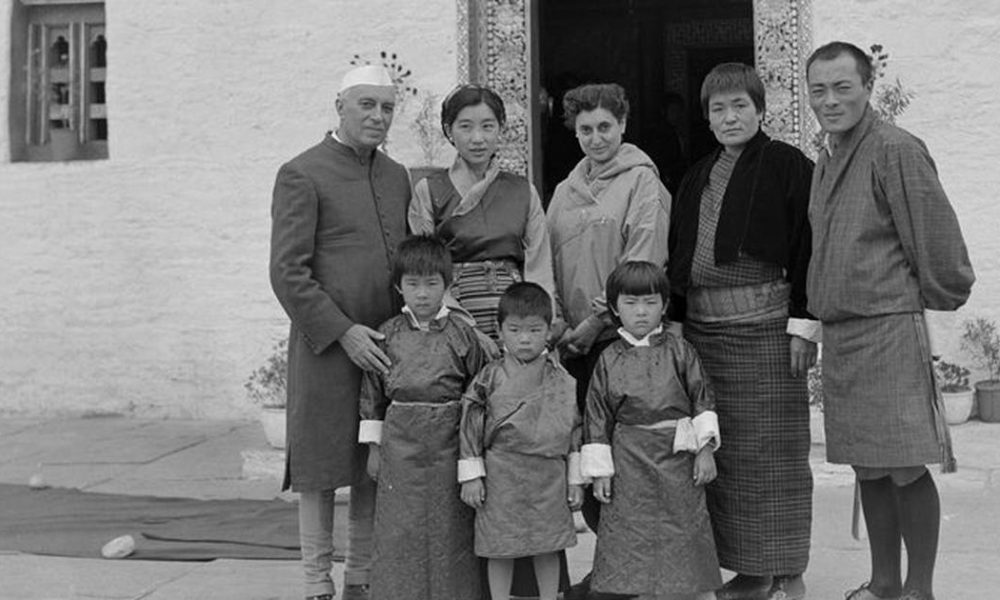
In the fall of 1958, India found itself at a critical juncture in its diplomatic relations with China, particularly as tensions began to escalate over the situation in Tibet. This backdrop of political unrest led Prime Minister Jawaharlal Nehru to cancel a planned trip to Lhasa, a journey he had hoped would fortify ties with Tibet amid troubling developments. However, the tenacious leader was not deterred; instead, he redirected his diplomatic efforts towards Bhutan, the secluded kingdom nestled in the Himalayas.
To embark on this diplomatic mission, Nehru faced the challenge of traversing a complex geographical landscape. His journey required him to navigate through Sikkim’s Nathu La Pass, enter Tibet, and continue through the picturesque Chumbi Valley’s Yatung before finally reaching Bhutan. This route was not just logistically demanding but also politically sensitive, requiring Nehru to secure permission from China for transiting through Tibetan territories. At that time, despite rising tensions, China was still seen as an ally, which complicated the diplomatic calculus.
Notably, the media of the time reflected the awkwardness of the situation between India and China. Journalist Bert Clemens, writing for the Brooklyn Daily in October 1958, highlighted the paradox faced by the Chinese government, which had once hailed Nehru as a friend and ally. Their stance was now tempered by growing unease, as they acknowledged that while Nehru was welcomed in Tibet, the conditions were deemed ‘dangerous’ for his visit. Ultimately, the Chinese authorities did grant Nehru the necessary permissions, albeit with a cool reception that suggested underlying tensions.
Throughout his journey, Nehru’s resolve to strengthen India’s influence in the region remained steadfast. The visit to Bhutan was not just about diplomacy; it was also an acknowledgment of the small nation’s strategic importance amid the broader geopolitical landscape of the Himalayas. Bhutan’s unique position, both geographically and culturally, made it an essential partner for India in counterbalancing Chinese influence in the region.
Nehru’s trek through the Himalayas stands as a testament to India’s diplomatic engagements during a time of uncertainty. His efforts to engage Bhutan were not merely about forging alliances but also reflected a vision for regional stability and cooperation. This historic journey underscores the complexities of diplomacy in the Himalayas, where geographical realities intertwine with the rich tapestry of cultural and political relationships.
Source: scroll.in







No Comment! Be the first one.