

New Study Reveals Social Dynamics of Male Elephants in Uttarakhand
In a groundbreaking revelation that challenges the long-held belief of solitary male Asian elephants, a recent study conducted in Rajaji National Park, Uttarakhand, indicates that these majestic...

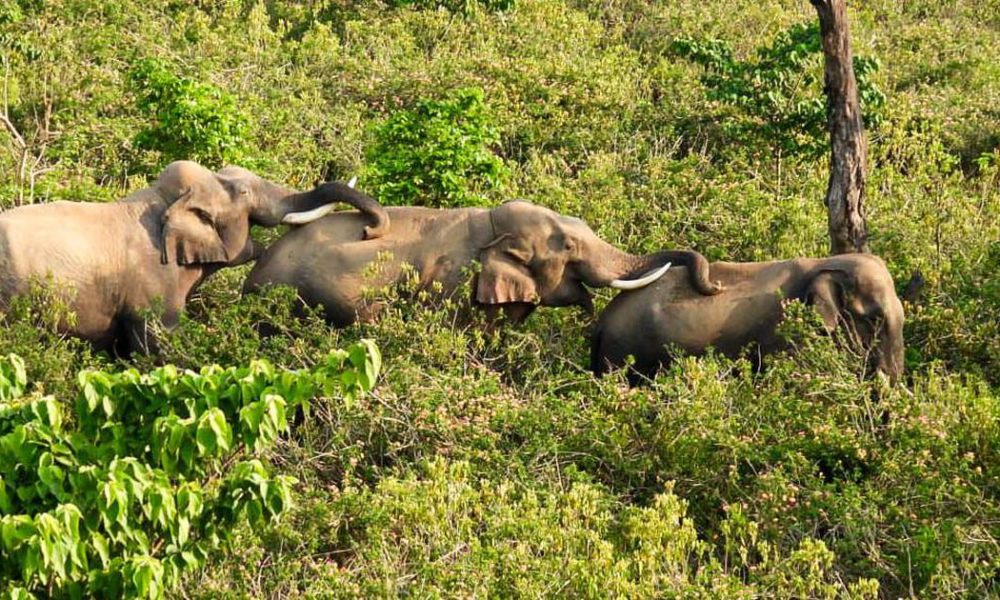
In a groundbreaking revelation that challenges the long-held belief of solitary male Asian elephants, a recent study conducted in Rajaji National Park, Uttarakhand, indicates that these majestic creatures often form intricate social networks. The research, published in 2026, unveils a more nuanced understanding of elephant behavior, suggesting that male elephants are not as solitary as previously thought.
Researchers observed the interactions of 706 elephants, focusing on 219 male individuals, and meticulously logged their sightings to create detailed histories. The findings indicate that these male elephants frequently gather in all-male groups, with their associations being influenced by factors such as age, reproductive status, and the specific habitat they occupy. This insight is vital, especially considering that many of these social interactions take place in open landscapes that are also frequented by humans, where conflicts between people and elephants have been documented.
Abhimanyu Madhusudanan, a wildlife biologist affiliated with the Wildlife Institute of India and the study’s lead author, emphasized the necessity of understanding these social dynamics. He noted, “Elephant responses to threats are context-based and vary across regions and populations. By comprehending how these animals connect with one another, we can formulate more effective strategies for mitigating conflicts.” This suggests that a deeper understanding of elephant behavior can lead to improved coexistence between humans and wildlife.
The methodology employed in the study involved a spatially explicit capture-recapture technique, which is primarily used to estimate population sizes by tracking the frequency and locations of individual elephants’ sightings. The analysis revealed that there are approximately 40 adult male elephants residing in the studied area, a significant finding for conservationists and wildlife managers.
As conservation efforts intensify in India, understanding the complex social structures of elephants becomes imperative. This research not only sheds light on the social habits of male elephants but also underscores the importance of considering these dynamics in conservation planning. The study advocates for targeted strategies that take into account the social behaviors of elephants, aiming to reduce human-elephant conflicts, which have become increasingly prevalent in areas where human activity encroaches on elephant habitats.
Source: scroll.in







No Comment! Be the first one.