

Remembering Jürgen Habermas: The Visionary Thinker Who Championed Civic Freedom
Jürgen Habermas, who passed away in 2026 at the age of 97, was a profound philosopher whose reflections on civic identity and public discourse resonate deeply even in contemporary society. His...

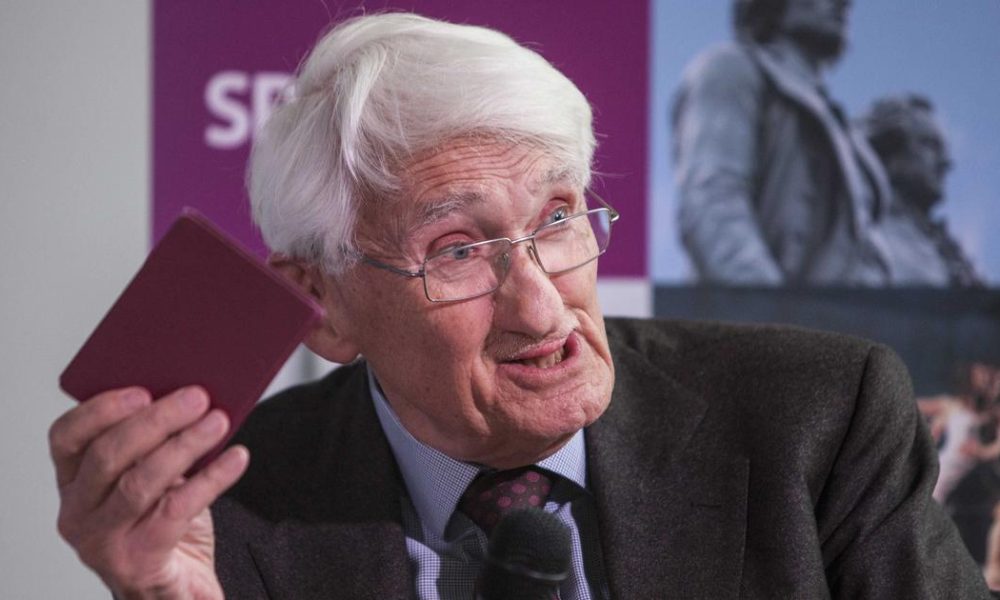
Jürgen Habermas, who passed away in 2026 at the age of 97, was a profound philosopher whose reflections on civic identity and public discourse resonate deeply even in contemporary society. His thoughts urge us to examine our roles as citizens amidst the complexities of state power and technology. While some may dismiss such philosophical inquiries as disconnected from reality, Habermas provided a framework that transcended mere theory, inspiring ways for individuals to embrace radical freedom in their daily lives.
For many, including those influenced by the teachings of the late Bernard Bate, Habermas stood as a beacon of utopian thought. Bate, an academic renowned for his analysis of public speaking traditions in Southern India, emphasized the importance of dialogue and oratory in fostering community cohesion. Through his lens, Habermas’s insights into public sphere theory illuminated pathways to challenge entrenched societal structures rooted in caste, religion, and community. In a rapidly transforming India, the essence of Habermas’s philosophy finds relevance in advocating for democratic engagement and a shared civic identity.
Habermas’s notion of the ‘public self’ encourages individuals to celebrate their identities while also acknowledging the otherness of strangers. This duality is vital in a diverse society like India, where varied histories and narratives coexist. His vision urges us to move beyond coercive membership within social groups and instead cultivate a culture of mutual respect and understanding. By fostering ‘stranger sociability’, Habermas inspires us to not only recognize our unique biographies but also embrace the collective human experience.
As we navigate the intricacies of modern governance and social interaction, Habermas’s work serves as a reminder of the potential within public discourse. His ideas challenge us to revive the spirit of engagement and dialogue, encouraging us to find common ground in a society often marred by division. In essence, Habermas’s legacy is a call to action for citizens to actively participate in the democratic process, ensuring that the public sphere is a space for all voices to be heard.
In conclusion, Jürgen Habermas’s thoughts remain a vital resource for understanding our civic responsibilities in today’s world. His emphasis on dialogue, freedom, and the public self offers a transformative approach to addressing contemporary challenges. As India continues to grapple with its postcolonial realities, the application of Habermas’s philosophy can nurture a more inclusive and engaged citizenry, fostering a future where dialogue reigns supreme.
Source: scroll.in







No Comment! Be the first one.