

Vancouver’s Komagata Maru Memorial: A Controversial Reinterpretation of History
In a significant move to honor the legacy of the Komagata Maru, the city government of Vancouver is set to unveil a refurbished memorial at Coal Harbour. This memorial pays tribute to the 376...

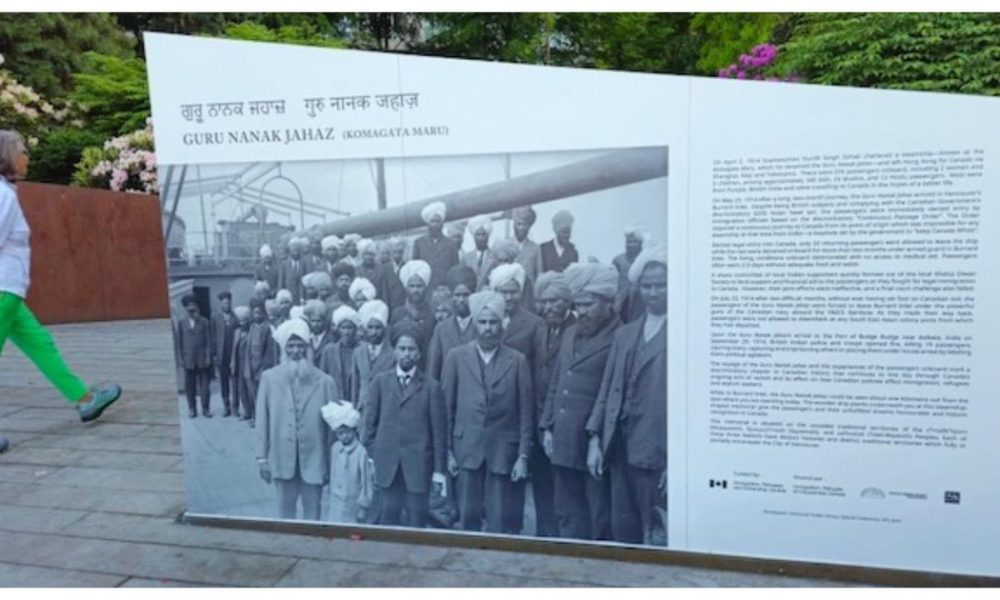
In a significant move to honor the legacy of the Komagata Maru, the city government of Vancouver is set to unveil a refurbished memorial at Coal Harbour. This memorial pays tribute to the 376 passengers of the Komagata Maru, a Japanese steamship that was famously denied entry into Canada in 1914, primarily due to racial discrimination prevailing at the time. Originally inaugurated in 2012, the memorial’s recent updates have sparked debates about the representation of this pivotal moment in Canadian history.
The revamped information panel now emphasizes the name ‘Guru Nanak Jahaz’ over the more widely recognized ‘Komagata Maru.’ While this shift may seem like an effort to correct historical narratives, it raises questions about the broader implications of such a reinterpretation. Critics argue that by focusing on its religious connotation, the memorial diminishes the complexities of the racial exclusion that the passengers faced and introduces contemporary political elements into a historical record that deserves thorough examination.
The journey of the Komagata Maru stands as a landmark case that highlighted the institutionalized racial discrimination of the British Empire. In 1914, Gurdit Singh, a Sikh businessman residing in Hong Kong, chartered the SS Komagata Maru to challenge Canada’s restrictive immigration laws. Singh’s promotional efforts aimed to inform Sikh emigrants of the voyage, where he referred to the ship as the Guru Nanak Jahaz, invoking a deeper spiritual significance by ceremonially bringing along the Guru Granth Sahib, the sacred text of Sikhism.
Singh’s mission transcended mere transportation; it was a bold statement against the colour bar that restricted the entry of South Asians into Canada. His heritage and faith fueled his determination to confront the prevailing injustices, transforming the voyage into a symbol of resistance against systemic racism. The Komagata Maru incident thus not only highlights the challenges faced by migrants but also reflects the broader struggles against colonial discrimination and the fight for equality.
As Vancouver commemorates this chapter of history, it is crucial for the city to engage in introspection regarding the narratives it chooses to emphasize. While the religious significance associated with the Guru Nanak Jahaz is important, the historical reality of racial exclusion and the legal battles fought by Gurdit Singh and his fellow passengers should not be overshadowed. A balanced representation is essential to ensure that the lessons of the past are not lost in the retelling of history, allowing for a more inclusive understanding of the struggles against racism that continue to resonate today.
Source: scroll.in







No Comment! Be the first one.