

Opposition Grows in Villages Against Tree Planting Program by State Forest Department
In a striking turn of events, several villages in Gujarat are voicing their concerns over a state initiative that incentivizes companies to plant trees. The program, aimed at enhancing forest cover,...

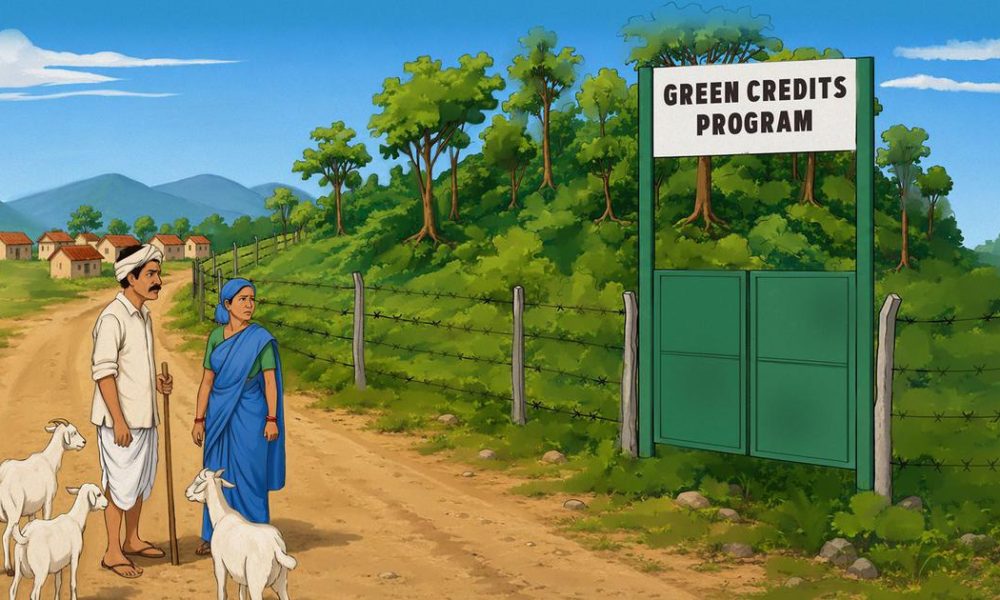
In a striking turn of events, several villages in Gujarat are voicing their concerns over a state initiative that incentivizes companies to plant trees. The program, aimed at enhancing forest cover, has sparked discontent among local communities, who feel sidelined in the implementation process.
Dattu Valvi, a resident of Mogarbara village, situated approximately 120 kilometers from Surat, recently took on a temporary role with the state forest department. His job involved driving a tractor equipped with a water tanker to irrigate saplings that had been planted by the department. As he maneuvered through the dry expanse of forest, he reflected on the rich biodiversity that has historically defined the region, including teak trees, timru with its leaves used for making bidis, and mahua, known for its oil-rich seeds.
Valvi’s routine took him to a fenced area where young saplings awaited sustenance. This territory, marked by white cement pillars and secured with barbed wire, was delineated as forest department land. Upon entering, Valvi recognized the stark contrast between the government’s objectives and the realities faced by local cultivators. For decades, he has nurtured the land nearby, situated alongside the banks of the Tapi River, whose waters feed into the Ukai dam reservoir established in 1972.
As Valvi watered the saplings, he pondered the implications of this initiative. Many villagers share his concerns, believing that while tree planting is commendable, the lack of community involvement and consultation undermines their traditional rights and land use practices. Critics argue that these forested areas, which are now fenced off, restrict their access to resources that have been vital for their livelihoods.
The tension between state-led afforestation efforts and local agricultural practices raises essential questions about sustainability and community rights. While the government’s aim is to combat climate change and enhance ecological health, it is crucial to balance these goals with the needs and voices of local populations. Engaging communities in the planning and execution of such programs could not only preserve their rights but also enhance the overall effectiveness of tree planting initiatives.
Source: scroll.in







No Comment! Be the first one.