

The Journey of a 17th Century Mughal Carpet: From India to a London Guild Hall
The Girdlers’ carpet, a stunning artifact from the Mughal Empire, tells a fascinating story that transcends cultures and centuries. Crafted in the 17th century, this exquisite piece of art was...

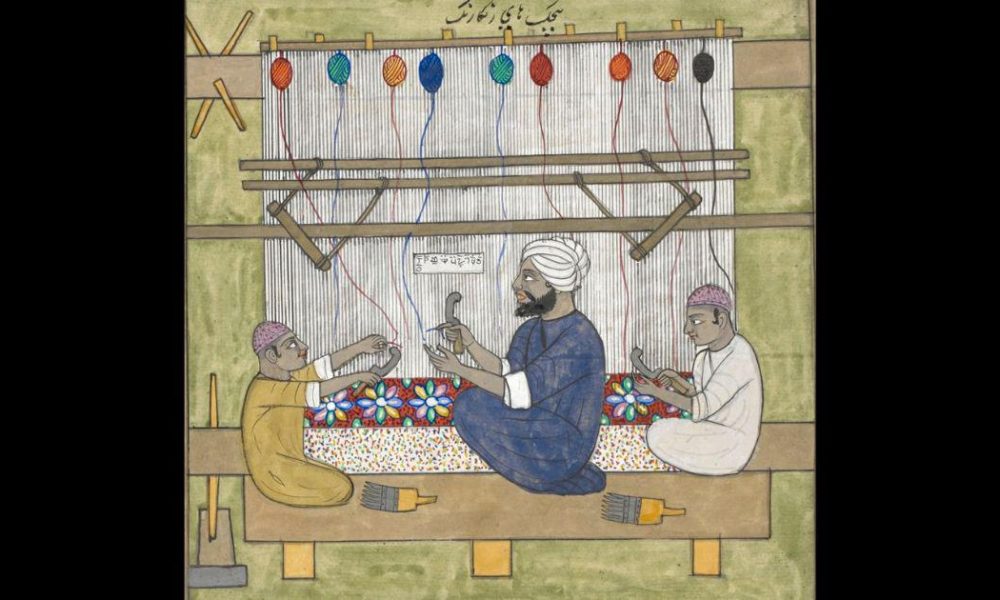
The Girdlers’ carpet, a stunning artifact from the Mughal Empire, tells a fascinating story that transcends cultures and centuries. Crafted in the 17th century, this exquisite piece of art was commissioned by Robert Bell, a prominent merchant and one of the founding figures of the English East India Company. In 1634, as Bell served his final term as Master of the Worshipful Company of Girdlers, he presented the carpet as a ceremonial gift, symbolizing the intertwining of Indian craftsmanship and British commerce.
The Worshipful Company of Girdlers, established in the medieval era, specialized in producing girdles, belts, and various metalwork. With roots tracing back to its royal charter from Edward III in 1327, the company has been a significant entity in London’s guild history. The carpet, made from luxurious threads sourced from the Mughal city of Lahore, had to journey through several trading ports, including Surat, before arriving in London. Once it reached the capital, it was used as a table covering in the Guild Hall, becoming an integral part of the company’s ceremonial life.
Despite facing calamities, the Girdlers’ carpet has withstood the test of time. It narrowly escaped destruction during the Great Fire of London in 1666, thanks to the quick thinking of its caretaker. Later, during the Blitz of World War II, when London was bombarded extensively, the carpet once again prevailed against the odds. These historical moments not only add to the carpet’s value but also highlight the resilience of cultural heritage amidst adversity.
In 1899, the carpet received a significant restoration, guided by the expertise of the director of the Victoria and Albert Museum. This revitalization allowed the artifact to continue to be a symbol of the merging of cultures, reflecting the rich tapestry of history between England and India. Today, it stands not just as a decorative piece but as a poignant reminder of the historical connections that bind these two nations.
The Girdlers’ carpet is more than a mere object; it is a testament to the enduring legacy of Indian artistry and its influence on global trade and culture. As it hangs in the London Guild Hall, it continues to serve as a bridge between the past and present, inviting viewers to appreciate the intricate stories woven into its fabric.
Source: scroll.in







No Comment! Be the first one.