

Supreme Court Raises Concerns Over Union Minister’s Role in Election Commission Appointments
The Supreme Court of India on Thursday expressed concerns regarding the inclusion of a Union Cabinet minister in the committee tasked with appointing the Chief Election Commissioner (CEC) and two...

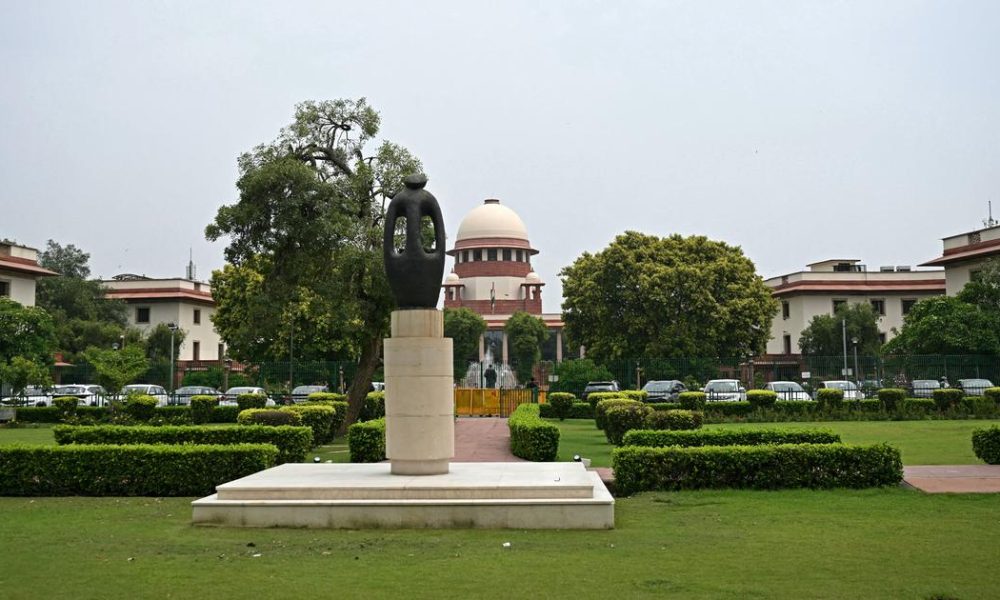
The Supreme Court of India on Thursday expressed concerns regarding the inclusion of a Union Cabinet minister in the committee tasked with appointing the Chief Election Commissioner (CEC) and two other Election Commissioners. This inquiry took place during the hearings of six petitions challenging the constitutional validity of a law enacted in December 2023 that outlines the selection process for the members of the Election Commission.
The bench, which included Justices Dipankar Datta and Satish Chandra Sharma, scrutinized the current law, known as the Chief Election Commissioner and Other Election Commissioners Appointment, Conditions of Service and Term of Office Act. According to this legislation, the appointment of the head of the Election Commission and its two other members is determined by a committee made up of the Prime Minister, a Union Cabinet minister, and the Leader of the Opposition in the Lok Sabha. This composition effectively grants the government a two-to-one advantage over the Leader of the Opposition in case of any disagreement.
This recent legal framework replaced a prior arrangement established by a Supreme Court ruling in March 2023, which had formulated a selection committee consisting solely of the Prime Minister, the Leader of the Opposition, and the Chief Justice of India. The current structure raises critical questions about the independence of the Election Commission, an institution vital for upholding the democratic process in India.
Justice Datta emphasized during the proceedings that it is not sufficient for the Election Commission to operate independently; its independence must also be perceived as legitimate by the public. The court’s observations reflect a broader concern regarding the integrity of electoral processes in the country, especially in light of ongoing discussions about the politicization of key democratic institutions.
As the hearings continue, the implications of this law could significantly impact the functioning of the Election Commission and, by extension, the electoral landscape of India. Legal experts and political analysts are closely watching these developments, as they could set precedents for the balance of power between the Executive and the Election Commission.
Source: scroll.in







No Comment! Be the first one.