

Suvendu Adhikari Set to Lead West Bengal as BJP Claims Victory; Vijay’s TVK Makes Waves in Tamil Nadu
The political landscape in India is witnessing significant shifts as Suvendu Adhikari is poised to become the new Chief Minister of West Bengal. Announced by the Bharatiya Janata Party (BJP) during a...

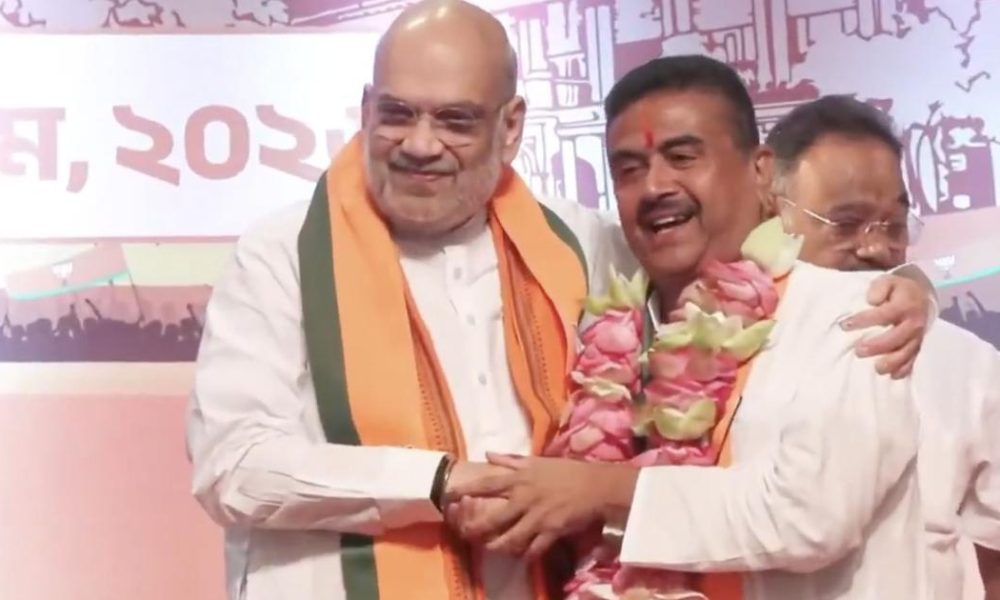
The political landscape in India is witnessing significant shifts as Suvendu Adhikari is poised to become the new Chief Minister of West Bengal. Announced by the Bharatiya Janata Party (BJP) during a meeting presided over by Union Home Minister Amit Shah, Adhikari’s appointment signals a crucial change in the state’s governance dynamics. The formal oath-taking ceremony is scheduled for 11 a.m. in Kolkata, marking a pivotal moment for the BJP in West Bengal.
Adhikari comes with a robust political background, having previously served as a Cabinet minister in the Trinamool Congress (TMC) government from 2011 to 2020. His switch to the BJP in December 2020, followed by his tenure as the Leader of Opposition from 2021 to 2026, has been a significant aspect of his political journey. The BJP’s victory in West Bengal has been met with mixed reactions, particularly from the citizens of Kolkata, where reports indicate a surge in political violence post-election. Local residents express a sense of disillusionment, feeling that their votes for change have yielded a political climate reminiscent of previous regimes.
Meanwhile, in Tamil Nadu, the political scene is equally dynamic with the Tamilaga Vettri Kazhagam (TVK), led by actor-turned-politician Vijay, emerging as the single-largest party in the recent Assembly elections. The TVK has successfully crossed the crucial majority threshold of 118 seats, with 108 seats won, paving the way for a government formation. The TVK has gained significant backing from the Communist Party of India and the Communist Party of India (Marxist), who have extended unconditional support to the party. This coalition is expected to bring about a new chapter in Tamil Nadu politics, as Vijay’s leadership is set to steer the state towards fresh governance.
The juxtaposition of political developments in both states underscores the evolving electoral landscape in India. As parties realign and new leaders emerge, the implications for policy, governance, and public sentiment remain to be seen. Analysts suggest that Adhikari’s leadership in West Bengal will be closely monitored, especially in light of the recent political unrest. Conversely, Vijay’s ascent in Tamil Nadu could symbolize a departure from traditional party politics, appealing to a younger, more dynamic voter base eager for change.
As these narratives unfold, the focus on governance and public welfare becomes increasingly vital. The implications of these electoral outcomes will shape the directions of both West Bengal and Tamil Nadu as they navigate through these transitions, emphasizing the significance of stability and accountability in the political discourse.
Source: scroll.in






No Comment! Be the first one.