

Disappearing Palash Forests Threaten Livelihoods in Jharkhand
In the heart of Kundri village, nestled in Jharkhand’s Palamu district, the palash tree holds significant cultural and economic value for the local Dalit community. Sarita Devi, a 40-year-old...

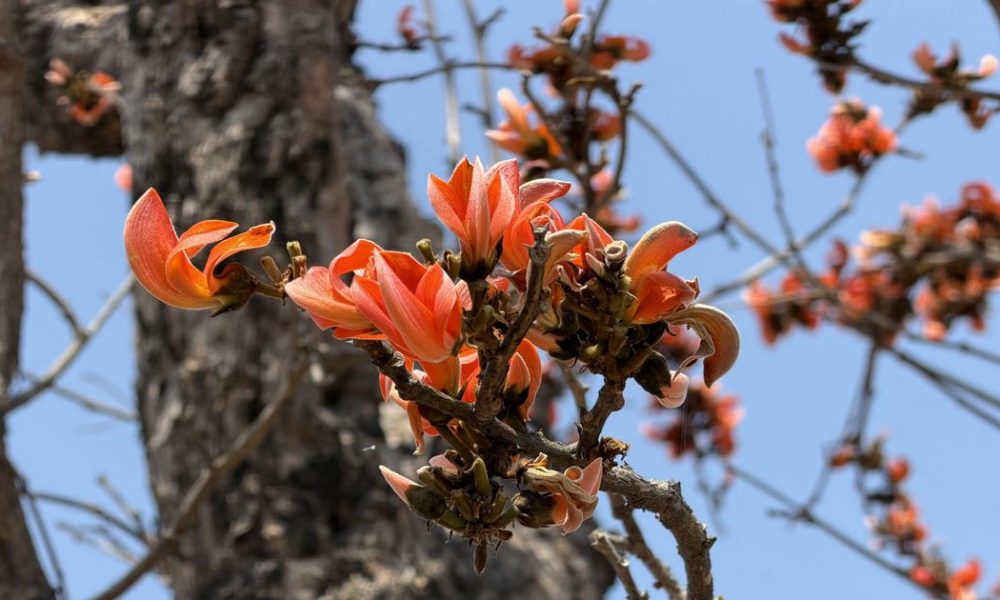
In the heart of Kundri village, nestled in Jharkhand’s Palamu district, the palash tree holds significant cultural and economic value for the local Dalit community. Sarita Devi, a 40-year-old resident, expresses a deep-rooted connection to this tree, stating, ‘When the palash flowers bloom fully, it indicates a promising summer and a bountiful monsoon. Conversely, if they bloom late, we can expect poor rainfall.’ This traditional knowledge illustrates how intricately weather patterns and farming activities are linked to the palash tree.
For generations, the people of Kundri have relied on the palash not only for weather predictions but also for their livelihoods. The tree is a crucial source for harvesting lac, a natural resin created by the insect Kerria lacca, commonly known in the region as rangeeni. The lac industry is pivotal to the local economy, with seasonal harvests occurring twice a year: once during the rainy season, which is collected in October-November, and again in the summer, harvested in June-July. Sarita recalls her years spent working at the Kundri lac farm, touted as the largest lac plantation in Asia. Her role involved tying lac-bearing twigs to palash branches, witnessing the resin’s gradual accumulation before its eventual collection.
However, the rapid decline of the palash forests poses a grave threat to the livelihoods of many in the region. Deforestation, driven by agricultural expansion and urban development, has led to a significant reduction in the number of palash trees. This decline not only affects the lac production but also disrupts the traditional weather forecasting practices that local farmers have depended upon for generations. Sarita reflects on the changes, saying, “We used to have plenty of trees around, but now they are disappearing, and with them, our ways of life.”
The implications extend beyond just the economic aspect; the cultural heritage tied to the palash tree is also at risk. The tree’s vibrant orange flowers, which herald the arrival of summer, are now fewer in number, and with them, a cherished tradition is fading. Many community members worry about the loss of this vital resource and the associated knowledge that has been passed down through generations.
As the climate crisis intensifies, the urgency to conserve these forests has never been more pressing. Local activists and environmentalists are now advocating for sustainable practices that can help rejuvenate the palash tree population. Restoration efforts and community awareness programs aim to reconnect the people with their environmental roots, ensuring that future generations can continue to rely on the palash for both its practical and cultural significance.
Source: scroll.in







No Comment! Be the first one.