

Breaking Barriers: Women of the Manganiyar Community Embrace Public Singing
In a bold statement against tradition, Dariya Bai, a member of the Manganiyar community, has made it clear that the voices of women should not be silenced. Her fiery retort to critics insisting that...

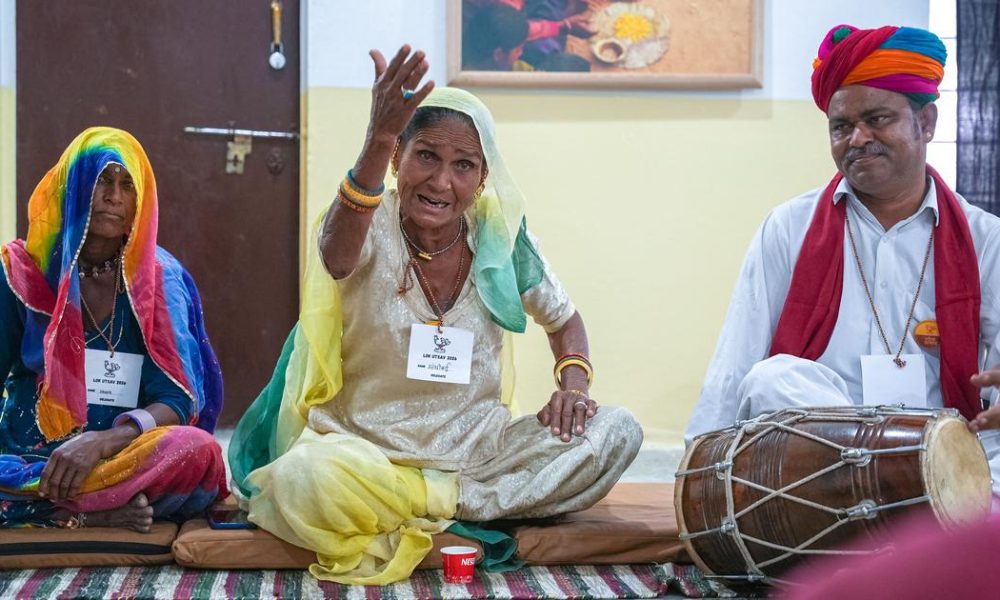
In a bold statement against tradition, Dariya Bai, a member of the Manganiyar community, has made it clear that the voices of women should not be silenced. Her fiery retort to critics insisting that women should refrain from singing in public—”Bhad mein jaao”—captures the growing defiance among women in a community traditionally dominated by men. Dariya is among just three women in a community of approximately 1,000 musicians who have dared to step onto public stages, challenging long-standing gender norms.
The Manganiyars, along with the Langas, are revered for their rich heritage of folk music, deeply rooted in the arid landscapes of western Rajasthan. These Muslim families have cultivated a unique musical tradition characterized by their own specific raga and tala systems. Since the inception of world music festivals and the efforts of noted folk archivist Komal Kothari, the community has gained international recognition, performing not only across India but also around the globe.
Despite this global outreach, the cultural and social fabric of the Manganiyar community remains closely tied to their rural roots. Many of these musicians hold multiple passports but still reside in villages where resources are scarce and social structures are rigid. In such contexts, the rigid gender roles pose significant barriers, often keeping women’s voices unheard in the public sphere, where they could contribute to and redefine their musical narrative.
The emergence of women like Dariya Bai on public platforms is a remarkable shift, reflecting a broader transformation in the cultural landscape of India. It signifies the gradual dismantling of patriarchal constraints, empowering women to reclaim their roles as artists. While they face resistance from traditionalists, the determination of these women to sing and perform is a testament to their resilience and a tribute to their cultural legacy.
As more women from the Manganiyar community step forward, they not only challenge the status quo but also inspire future generations to pursue their passions without fear of societal judgment. Their narratives are not just about music; they represent a quest for autonomy, recognition, and a redefinition of gender roles in a society that has long dictated limitations. The time has come for the world to listen to their songs and stories, heralding a new era for Manganiyar women on the global stage.
Source: scroll.in






No Comment! Be the first one.