

Reviving Tradition: Odisha’s Adivasi Farmers Safeguard Indigenous Seeds
Long before the sun casts its first rays over the Gonasika Hills in Keonjhar district of Odisha, Parmedhenu Juang, a dedicated 54-year-old farmer, is already at work in his field. As June marks the...

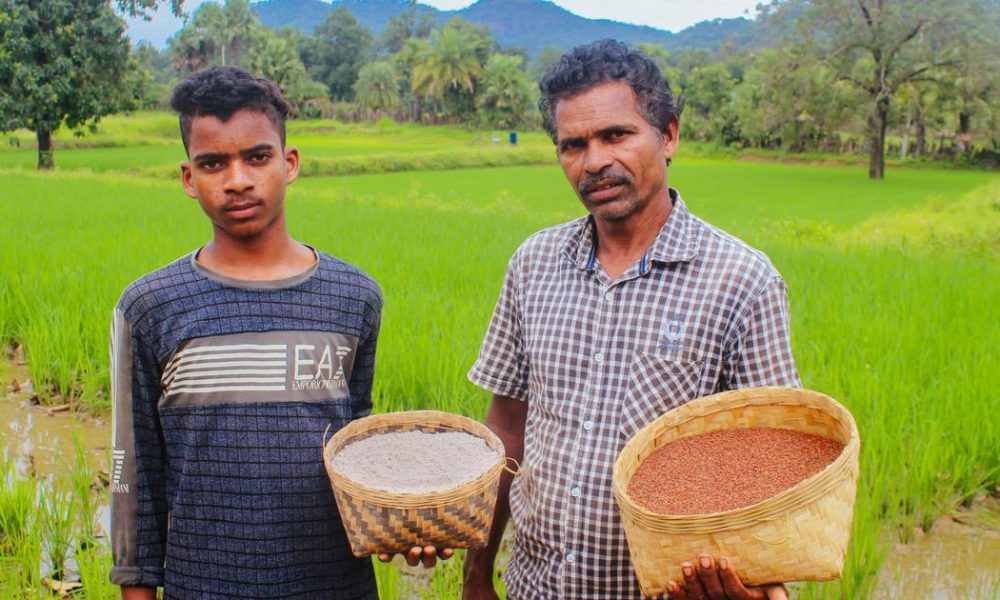
Long before the sun casts its first rays over the Gonasika Hills in Keonjhar district of Odisha, Parmedhenu Juang, a dedicated 54-year-old farmer, is already at work in his field. As June marks the onset of the monsoon, he meticulously sifts through a handful of ragi, assessing its color, weight, and shape with a discerning eye. “Desi bihana,” or traditional seeds as they are known in Odia, are more than mere agricultural tools for Juang; they are akin to living entities that require care and attention. “If nurtured, they remain robust; if neglected, they gradually fade away,” he explains, reflecting the deep bond he shares with these seeds.
In Iruda village, the legacy of preserving traditional seeds has spanned at least three generations of Juang’s family, part of Odisha’s Particularly Vulnerable Tribal Groups (PVTGs). This community has maintained a rich tapestry of traditional crops, including finger millets, sorghum, little millet, pearl millet, black gram, cowpeas, green gram, and various types of paddy. However, this treasure trove of biodiversity is under threat as many of these indigenous seeds are gradually disappearing from the agricultural landscape.
The advent of the Green Revolution dramatically reshaped India’s agricultural paradigm, promoting high-yield hybrid seeds and chemical-intensive monocropping practices, primarily focusing on staples like wheat and rice. In this shift, diverse indigenous seeds, particularly those not included in government procurement programs, have been largely overlooked. The Adivasi communities, however, continue to cultivate and preserve these traditional varieties, which have been adapted over generations to suit local climatic conditions, soil types, and regional food cultures.
For example, the para dhan, a unique variety of paddy, is particularly resilient to water scarcity and can be harvested within 60 days, making it a crucial crop for farmers in the region. Such varieties not only contribute to food security but also enhance biodiversity, playing an essential role in sustaining the environment.
The preservation efforts of the Juang family and communities like theirs highlight a significant aspect of India’s agricultural heritage. As contemporary farming practices increasingly prioritize hybrid strains, the knowledge and seeds cultivated by these Adivasi farmers remind us of the importance of biodiversity in our food systems. By nurturing these traditional seeds, they are not just preserving their cultural identity but also enriching the agricultural landscape, ensuring that future generations can continue to thrive.
Source: scroll.in







No Comment! Be the first one.