

Has the Decline of Regional Parties Signaled the End of Federalism in India?
In recent years, the political landscape of India has witnessed significant shifts, particularly concerning the influence of regional parties in the face of the rising prominence of the Bharatiya...

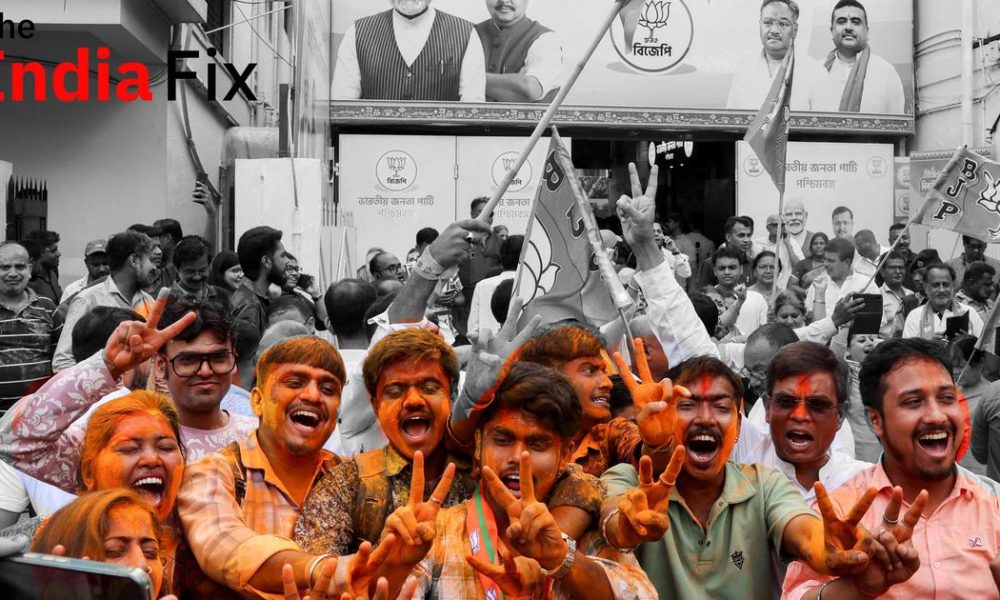
In recent years, the political landscape of India has witnessed significant shifts, particularly concerning the influence of regional parties in the face of the rising prominence of the Bharatiya Janata Party (BJP). Once regarded as bastions of regional pride and federalism, parties like the Trinamool Congress (TMC) in West Bengal and the Dravida Munnetra Kazhagam (DMK) in Tamil Nadu have faced unprecedented challenges, raising questions about the future of federal identity in the nation.
The BJP’s ascent to power marked a crucial transformation in Indian politics, where secularism, a foundational aspect of the country’s democracy, appeared to be gradually eroding since the 1980s. The recent electoral outcomes have highlighted a troubling trend: as the BJP consolidates its power, the regional identities that once served as counterweights to Hindutva are increasingly being undermined. The party’s significant lead over the TMC in West Bengal, a stronghold of Bengali nationalism, is indicative of this shift.
Furthermore, while the BJP has not made substantial inroads in Tamil Nadu, the recent electoral setback faced by the DMK, a key proponent of federalism and state-centric linguistic identities, signals another blow to regionalism. The DMK’s defeat raises concerns about the viability of state-based political movements in a climate dominated by nationalistic rhetoric.
The historical context of federalism in India cannot be overlooked. Federalism emerged as a significant political principle following independence, designed to respect the diverse linguistic and cultural identities of various states. However, the BJP’s campaign against this principle has intensified over the past few decades, especially following the decline of secularism. The party has strategically positioned itself as a nationalistic force, often at odds with the ethos of regional representation.
As we observe these developments, it becomes evident that the BJP’s rise is not merely about electoral victories but rather a concerted effort to reshape the political narrative in India. With secularism seemingly in retreat and federal identities under pressure, the question looms: does this signify the death knell for federalism in India? The upcoming political battles will undoubtedly determine whether regional parties can reclaim their lost ground or if their decline will pave the way for a more centralized form of governance under the BJP’s influence.
Source: scroll.in







No Comment! Be the first one.