

Mumbai Police Deploys Surveillance Tactics to Thwart Youth Protests Amid NEET Controversy
In a noteworthy incident on July 20, Mumbai student Preeti Kamble found herself caught in a web of police surveillance while attempting to express her solidarity with fellow students protesting in...

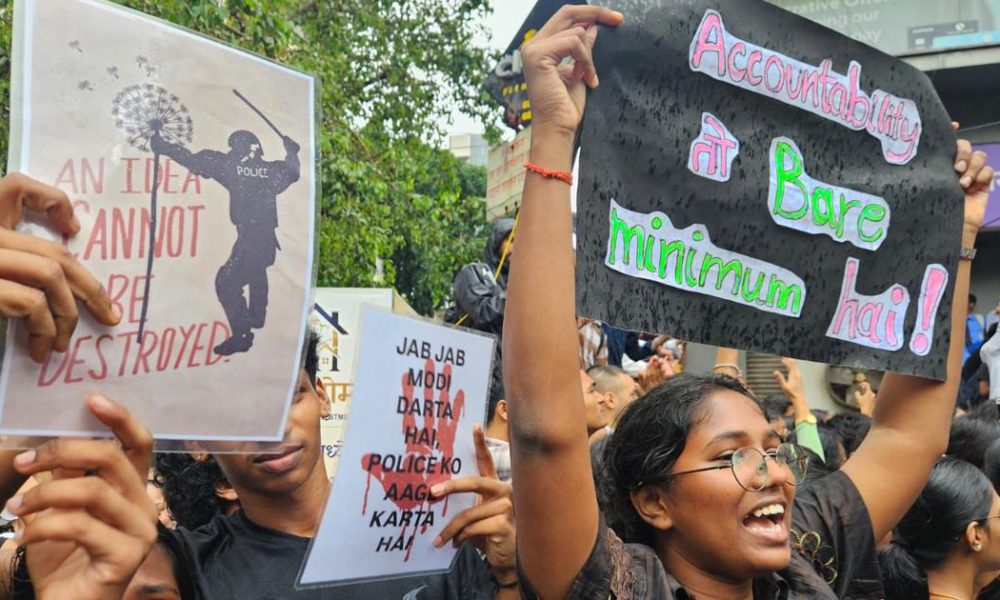
In a noteworthy incident on July 20, Mumbai student Preeti Kamble found herself caught in a web of police surveillance while attempting to express her solidarity with fellow students protesting in Delhi. This event unfolded just hours after police clashed with demonstrators marching to Parliament, leading to concerns over the treatment of students advocating for their rights.
Fresh from her Class 12 examinations and awaiting her college journey, Kamble’s motivation was deeply personal. “A close friend of mine is getting ready for the NEET exam,” she explained, alluding to the national-level medical entrance test that has recently stirred controversy due to alleged mismanagement by the authorities. The protest in Delhi, driven by the Cockroach Janta Party, sought the resignation of Union Education Minister Dharmendra Pradhan, who has been criticized for his handling of the examination.
“Her parents have invested their life savings into her education, and I wanted to do my part to ensure she doesn’t face the same obstacles as other NEET aspirants,” Kamble noted. However, her attempt to join the protest was abruptly halted when police detained her before she could even reach the demonstration point. Taken to the Kalachowkie police station in south-eastern Mumbai, officials recorded her personal details before releasing her.
The following day, in a twist that reflects the growing concerns over civil liberties, Kamble received a call from her local police station in Amboli, located in northern Mumbai. This call was part of a broader strategy employed by the police, which has raised alarms about the extent to which law enforcement is leveraging surveillance to monitor and restrict youth-led protests. Such tactics aim to deter public demonstrations, particularly in sensitive scenarios like those surrounding educational reforms.
This incident highlights a growing trend where authorities are employing surveillance methods to preemptively address potential unrest among the youth. Many students and activists feel that such measures stifle free expression and the right to protest, cornerstones of democracy. As the debate continues, it remains to be seen how this issue will evolve and what implications it might have for student activism across India.
Source: scroll.in





No Comment! Be the first one.