

Delhi Protests: Calls for Judicial Oversight on Police Actions Amid Unrest
On Monday, a significant political demonstration organized by the Cockroach Janta Party unfolded in Delhi, leading to a volatile confrontation between protesters and law enforcement agencies. As...

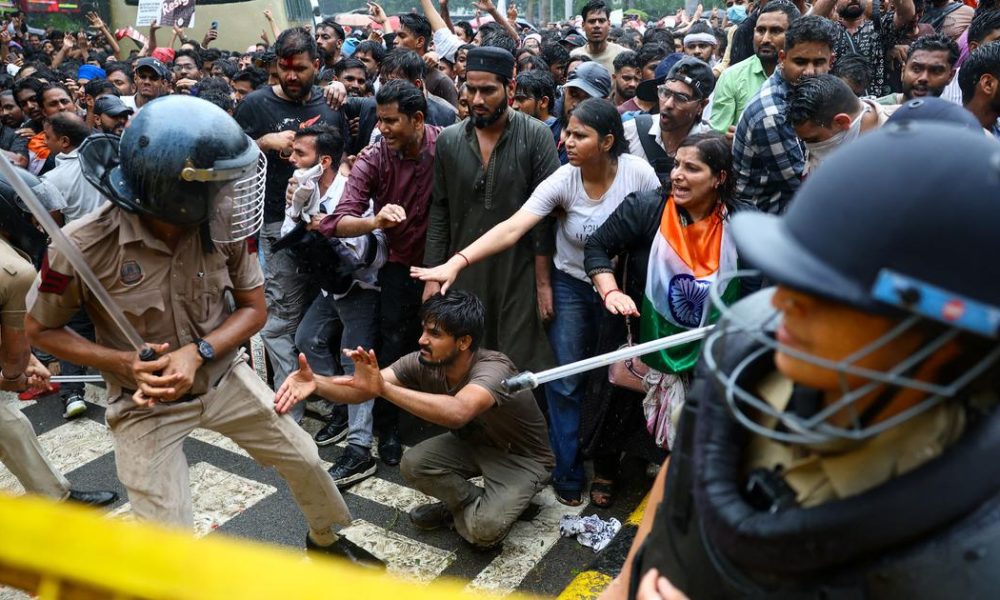
On Monday, a significant political demonstration organized by the Cockroach Janta Party unfolded in Delhi, leading to a volatile confrontation between protesters and law enforcement agencies. As images of the march circulated widely on social media, the Delhi Police confirmed that they had not authorized the gathering, which resulted in clashes when participants allegedly breached barricades and threw stones. Reports indicate that the police and the Rapid Action Force (RAF) reacted with what many observers have described as excessive force.
Video footage from the scene depicts police personnel deploying tear gas and striking protesters with batons, even as many demonstrators were retreating and not actively engaging in aggression. While these incidents are yet to be fully verified, the apparent disparity in force used by law enforcement raises serious concerns among civil rights advocates and the public.
In a related development, Chief Justice Surya Kant of the Supreme Court declined to expedite a petition that accused the police of excessive use of force during the protests. During a hearing on Wednesday, he reportedly advised the petitioner against wasting the court’s time, even after being informed that video evidence could be presented. Live Law reported that the Chief Justice’s remarks included, “We don’t have time to watch.”
Further escalating the situation, on Tuesday, a public interest litigation concerning police violence was brought before the Delhi High Court. However, the bench dismissed the plea with comments discouraging the court’s involvement in such matters, according to reports. The contrasting reactions from the judiciary underscore the ongoing debate regarding the role of the legal system in overseeing police actions during public protests.
The recent protests reflect a broader discontent within the Indian populace regarding police conduct, especially during times of civil unrest. Critics argue that the judiciary must play a more proactive role in ensuring accountability and protecting citizens’ rights, particularly against what they perceive as state-sanctioned violence. As the situation continues to evolve, the demand for judicial intervention and scrutiny of police actions is likely to intensify, prompting discussions about the balance between maintaining public order and protecting civil liberties.
Source: scroll.in






No Comment! Be the first one.