

Allahabad High Court Dismisses Petition Against UP Police’s Actions on Khamenei Portraits
The Allahabad High Court has recently chosen not to proceed with a public interest litigation aimed at curbing the Uttar Pradesh Police’s alleged actions regarding the display of portraits of...

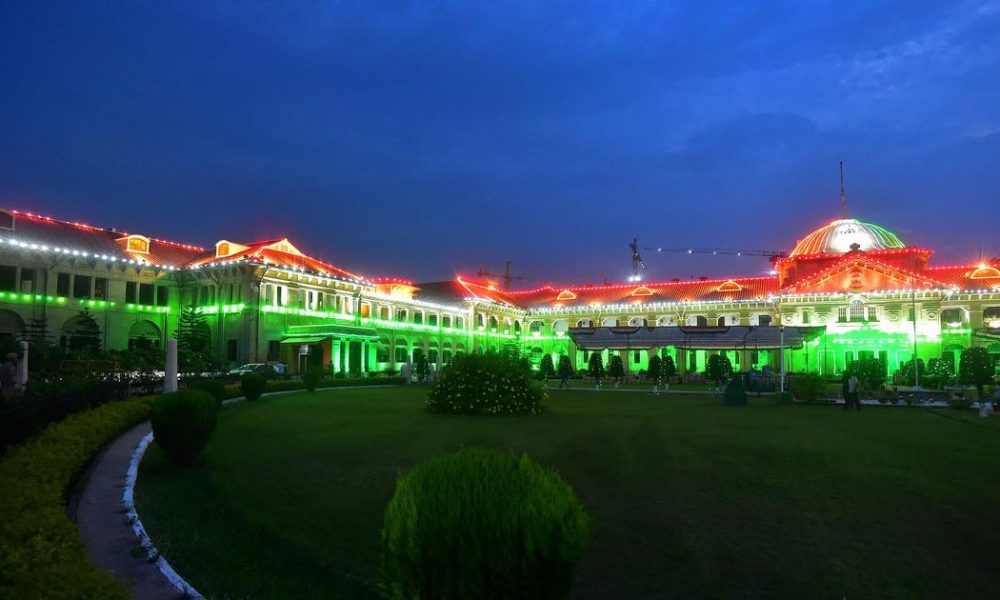
The Allahabad High Court has recently chosen not to proceed with a public interest litigation aimed at curbing the Uttar Pradesh Police’s alleged actions regarding the display of portraits of prominent Islamic figures, including the late Iranian Supreme Leader Ayatollah Ali Khamenei, in private spaces.
This petition was filed by the Islamic organization Majlis Ulema-E-Hind, which urged the court to instruct police officials throughout Uttar Pradesh—ranging from district police chiefs to station house officers—not to engage in coercive measures or detain individuals displaying portraits of Shia leaders during mourning ceremonies. The pleas also requested the court to prohibit any police intervention in the removal or alteration of banners and images associated with these religious figures on both residential and commercial properties.
However, during a hearing earlier this week, a division bench comprising Justices Rajan Roy and Manjive Shukla found the petition insufficiently detailed, labeling the allegations as “vague and general.” The judges expressed their concerns that the petitioners failed to provide specific instances where the police interference had occurred. They noted that the petition did not name particular locations or properties where the purported removals of portraits were taking place.
The court also articulated that any individual with a distinct grievance against a law enforcement officer could seek legal remedies tailored to their specific situation. This assertion underscores the judiciary’s emphasis on precise and well-substantiated claims when addressing concerns related to civil rights and police conduct.
Ayatollah Khamenei, who held the position of Iran’s Supreme Leader from 1989, remains a significant figure in Islamic leadership circles, and his portrayal is often part of religious and cultural expressions among Shia Muslims. The issue of displaying such images is particularly sensitive in a diverse country like India, where religious sentiments can often intertwine with political and social dynamics.
Source: scroll.in




No Comment! Be the first one.