

Madras High Court Halts Church Construction Near Historic Temple, Citing Community Concerns
The Madras High Court has issued an interim order to halt the construction of a church proposed by the Church of South India, located in close proximity to a century-old Mariamman Temple in...

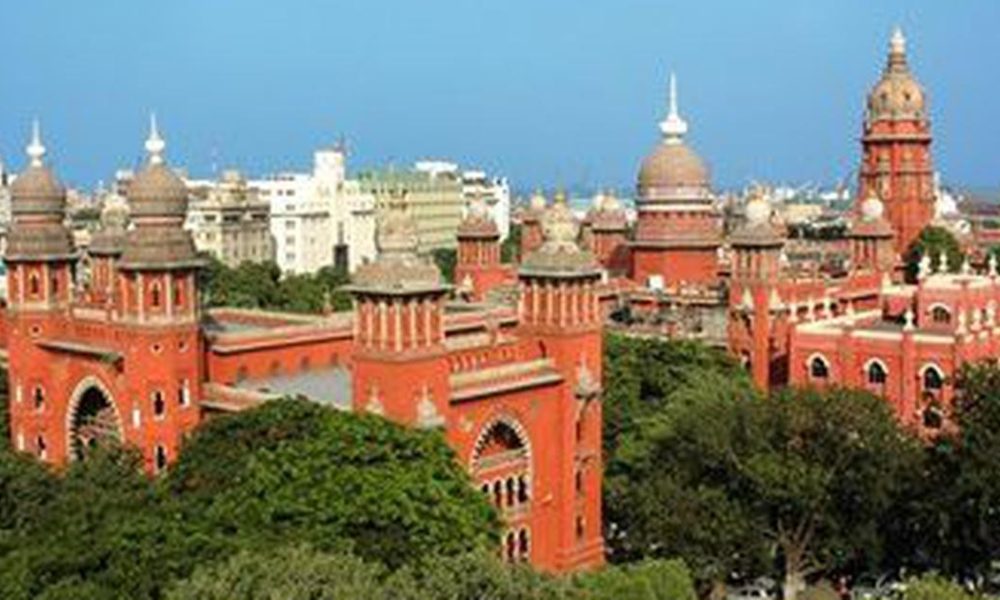
The Madras High Court has issued an interim order to halt the construction of a church proposed by the Church of South India, located in close proximity to a century-old Mariamman Temple in Kalapatti, Coimbatore. The court’s decision arose from concerns that the intentions behind the church’s establishment might not be entirely benevolent, especially given the area’s communal sensitivities.
A division bench consisting of Justices GR Swaminathan and V Lakshminarayanan made this ruling after reviewing a petition from a local resident who challenged the official permissions granted for the church’s construction. The Mariamman Temple, which has been a focal point of the community for over 100 years, is situated just a short distance from the proposed site of the new church.
In their observations, the judges emphasized that Coimbatore has a history marked by communal tension, including instances of violent riots and bomb blasts. They highlighted the demographic makeup of the local population, noting that out of approximately 1,000 families in the vicinity, around 950 identify as Hindus, with a minority of 15 Muslims and only a handful of Christians. The court pointed out that the significant Hindu majority has expressed strong opposition to the church’s construction, urging the local authorities to take these objections seriously instead of dismissing them.
The bench remarked, “When the Hindu community constitutes such a substantial majority and exhibits vigorous opposition to the establishment of a church nearby, it becomes imperative for the authorities to heed their concerns.” This statement underscores the delicate balance that must be maintained in areas where religious sentiments run deep.
While the court’s remarks highlight the potential challenges of fostering inter-religious harmony in sensitive regions, it clarified that the ruling should not be interpreted as a blanket opposition to religious structures but rather as a call for thorough consideration of community sentiments and historical context. The court’s decision is a significant reminder of the complexities involved in managing religious coexistence in India.
Source: scroll.in






No Comment! Be the first one.