

Jahangir’s Philosophical Quest: The Mughal Emperor’s Dialogue with Vedanta
In the winter of 1617, a remarkable event took place that intertwined the worlds of Indian philosophy and Mughal royalty. Jahangir, the fourth ruler of the Mughal dynasty, broke away from the...

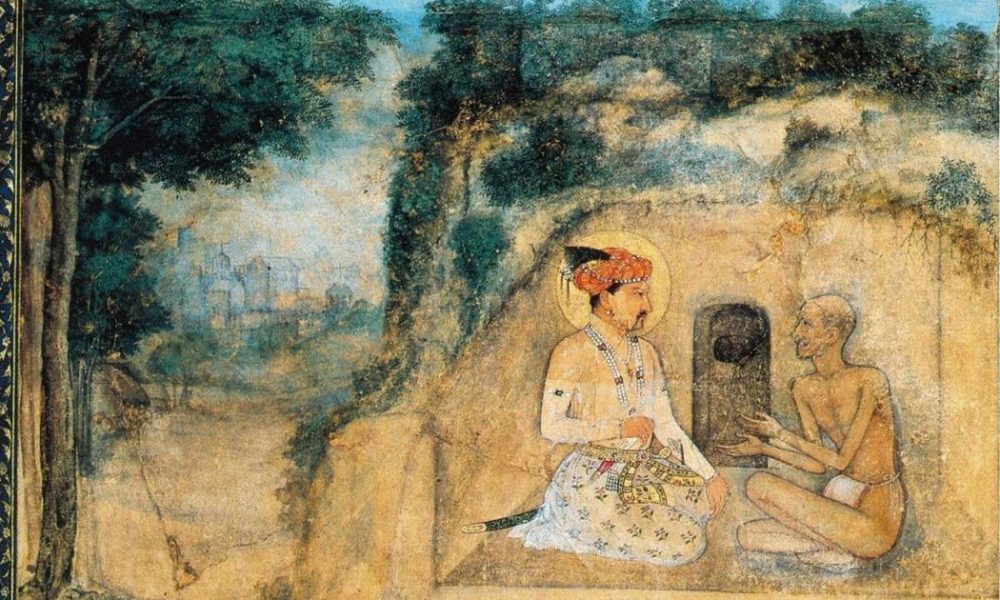
In the winter of 1617, a remarkable event took place that intertwined the worlds of Indian philosophy and Mughal royalty. Jahangir, the fourth ruler of the Mughal dynasty, broke away from the lavishness of his royal procession, making his way towards a modest cave near Ujjain. This cave was home to Chitrup, known to history as Jadrup Gosain, a Vedantic ascetic who had deserted worldly pleasures at the age of 22. For 38 years, Jadrup dedicated himself to rigorous austerities, consuming only five mouthfuls of food each day, bathing twice daily, and meditating on profound philosophical questions regarding the self and ultimate reality.
Contrasting sharply with his ascetic counterpart, Jahangir led a life filled with indulgence and inner turmoil. His reign was marked by extravagant feasts and heavy drinking, yet beneath this facade of excess lay a deep-seated yearning for spiritual detachment. This paradox of character drove Jahangir to seek wisdom not through military counsel or political stratagems but through philosophical discourse with Jadrup Gosain.
Over the span of two years, Jahangir made several visits to Jadrup’s humble abode, engaging in conversations that transcended mundane topics. These dialogues were significant, as Jahangir endeavored to bridge the seemingly disparate realms of Vedanta and Sufism. His intellectual ambition was to demonstrate that both traditions, while rooted in different cultural contexts, ultimately expressed the same truths about existence, identity, and the divine. Vedanta, a philosophical tradition within Hinduism, explores the concept of the individual self (atman) and its unity with the ultimate reality (brahman), as articulated in the ancient texts known as the Upanishads. In parallel, Sufism, the mystical dimension of Islam, delves into the same essence of spiritual realization, emphasizing love, unity, and the quest for truth.
This pursuit of a common philosophical ground highlights an intriguing aspect of Jahangir’s reign—his openness to ideas beyond his immediate cultural framework. The discussions with Jadrup not only reflect Jahangir’s personal struggle with guilt and detachment, especially concerning his relationship with his rebellious son Khusrau, but also underscore a broader intellectual curiosity that sought to unify divergent spiritual paths. In a time characterized by religious and cultural pluralism, such dialogues laid foundational stones for mutual understanding among diverse belief systems.
Ultimately, Jahangir’s engagement with Vedanta through his interactions with Jadrup Gosain invites us to reflect on the interconnectedness of ideas across different traditions, reminding us that the quest for truth often transcends the boundaries of religion and culture. His philosophical explorations may well be seen as a precursor to the modern conversations on spirituality and unity amidst diversity in India.
Source: scroll.in







No Comment! Be the first one.