

Key Developments in Indian Politics and Law: May 1-14 Highlights
The first half of May has ushered in significant developments in Indian politics and law, reflecting ongoing challenges and changes within the country. From Supreme Court decisions to government...

The first half of May has ushered in significant developments in Indian politics and law, reflecting ongoing challenges and changes within the country. From Supreme Court decisions to government statements on financial crimes, the main headlines provide a glimpse into the contentious atmosphere shaping India.
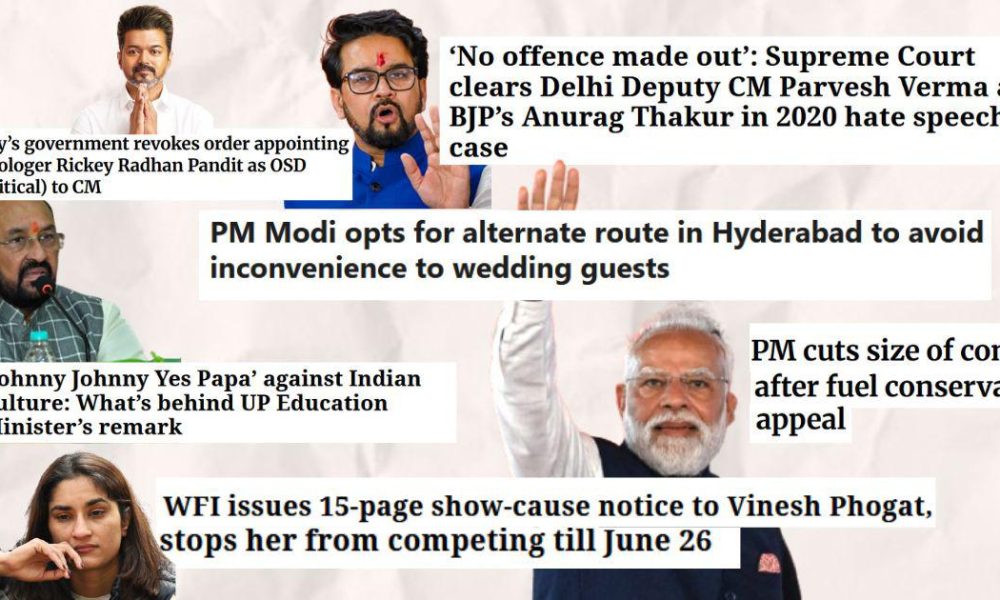
On May 1, the Supreme Court delivered a notable verdict regarding the alleged hate speeches made by Delhi’s Deputy Chief Minister Parvesh Sahib Singh Verma and former Union Minister Anurag Thakur. The court ruled that no cognizable offense was committed by the two BJP leaders during their speeches, which were aimed at critics of the Citizenship (Amendment) Act (CAA) in 2020. This ruling has sparked conversations about the implications of political speech and the legal protections afforded to public figures in India.
In a related development, Union Minister of State for Finance Pankaj Chaudhary addressed concerns regarding the Enforcement Directorate (ED) on May 2. In his statement, he emphasized that the Modi government has empowered the ED to tackle financial crimes and terrorism funding effectively. Chaudhary clarified that the agency’s mandate was not to target individuals but to combat the broader issues of financial misconduct. This reassurance is essential as the ED has faced scrutiny over its operations and the perceived politicization of its investigations.
Another significant event occurred on May 3, when the National Investigation Agency (NIA) requested documents from the Mumbai Press Club concerning a gathering attended by individuals linked to the 2018 Bhima Koregaon case. The event raised concerns due to the involvement of accused persons who are currently out on bail. The NIA’s move highlights the ongoing investigation into the case, which has drawn considerable public and media attention, particularly regarding the rights of the accused and the implications for freedom of expression.
These developments not only reflect the current legal landscape in India but also underscore the tensions surrounding political discourse and law enforcement practices. As these stories unfold, they will undoubtedly shape public perception and political dialogue in the coming weeks.
Source: scroll.in





No Comment! Be the first one.