

Detention of CJP Leaders at Jantar Mantar Sparks Controversy Amid Protests
In a significant turn of events, leaders from the Cockroach Janta Party (CJP)—Ashutosh Ranka, Saurav Das, and Ajinkya Shinde—were detained by the Delhi Police after they reportedly entered Jantar...

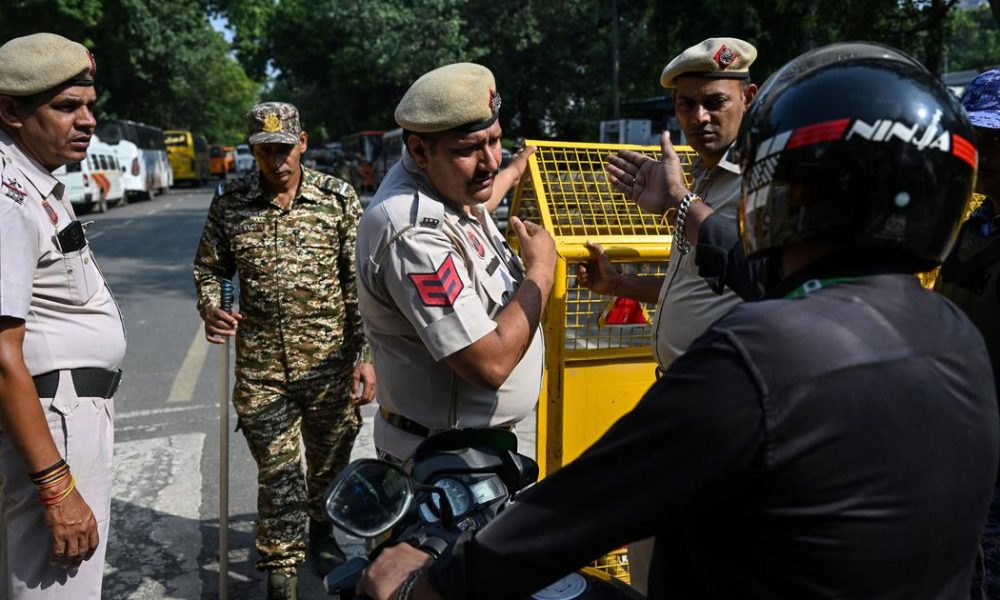
In a significant turn of events, leaders from the Cockroach Janta Party (CJP)—Ashutosh Ranka, Saurav Das, and Ajinkya Shinde—were detained by the Delhi Police after they reportedly entered Jantar Mantar without permission. The incident took place shortly after the protest site was denotified, following a recommendation from a committee appointed by the Union Home Ministry. The leaders were allegedly barred from consulting their lawyer, and their mobile phones were confiscated, raising concerns about their rights and the legality of the police action.
The political landscape has intensified with this development, as Abhijeet Dipke, the founder of the CJP’s political campaign, took to social media to express dissent. He addressed Prime Minister Narendra Modi directly, stating, “You cannot denotify the resistance,” highlighting the growing frustration among various political factions against the government’s stance on protests and civil liberties.
Meanwhile, the situation surrounding Jantar Mantar has sparked broader discussions about the right to protest in India. The denotification has effectively restricted access to this historical site known for its role in mobilizing public opinion and civic engagement. Critics argue that such moves aim to suppress dissent and silence opposition voices in the country.
On another front, the geopolitical tensions between India and China have come to the fore again. The Chinese government has labeled India’s recent decision to assign standardized names to 28 locations in the Union Territory of Ladakh as “illegal and invalid.” Chinese Foreign Ministry spokesperson Mao Ning asserted that China does not recognize the unilateral establishment of Ladakh as a Union Territory by India. This statement underscores the ongoing disputes over territorial claims in the region.
In response, India’s Ministry of External Affairs reaffirmed its position, declaring that Ladakh is an “integral and inalienable part of India,” and emphasized that no amount of denial from China would alter this reality. As these international tensions unfold, they are being closely monitored both domestically and globally.
In a separate legal matter, the Supreme Court of India has intervened in a criminal defamation case against Congress leader Rahul Gandhi. The court has temporarily halted proceedings related to remarks he made, in which he referred to Prime Minister Modi as the “choron ke sardar,” or the leader of thieves. This case highlights the fraught relationship between political figures and the judiciary, as well as the contentious nature of political discourse in the country.
Source: scroll.in






No Comment! Be the first one.