

India Defends Its Democratic Integrity at UN Amid Human Rights Allegations
India has firmly rejected what it termed as a ‘negative characterisation’ of its human rights record, during a statement made at the United Nations General Assembly in New York on Wednesday....

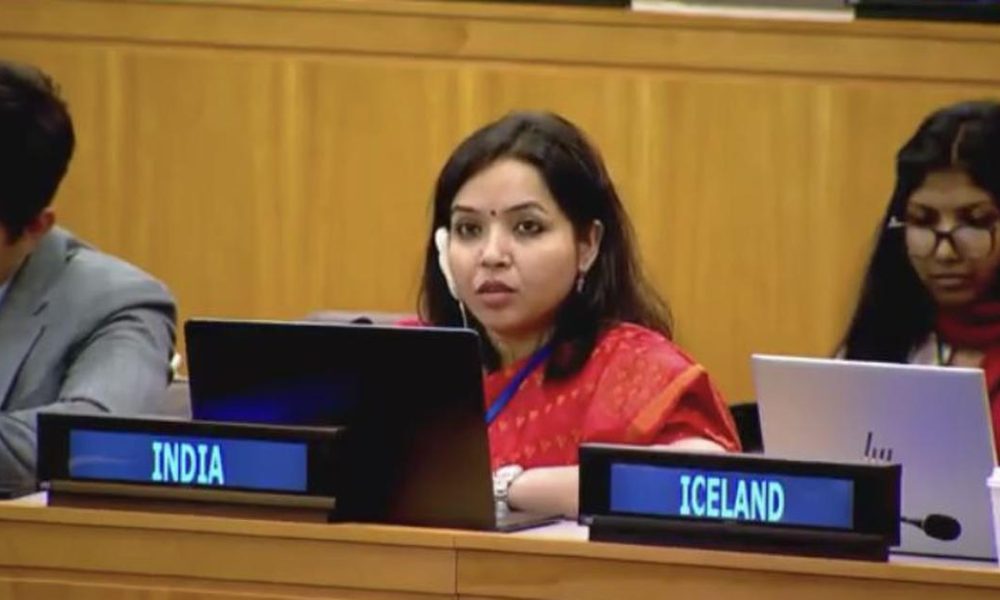
India has firmly rejected what it termed as a ‘negative characterisation’ of its human rights record, during a statement made at the United Nations General Assembly in New York on Wednesday. Responding to allegations of human rights violations and claims of incomplete statistics, Indian officials sought to underscore the country’s commitment to democracy and the rule of law.
Barkha Tamrakar, Deputy Secretary in the Ministry of External Affairs, articulated India’s position against the politicization of human rights issues, asserting that these concerns should not be manipulated as instruments for political pressure or selective targeting of nations. The remarks were made shortly after UN human rights experts expressed serious concerns regarding the Indian government’s response to peaceful protests, particularly those led by youth against Chief Election Commissioner Gyanesh Kumar’s management of the special revision of voter rolls.
The UN experts highlighted a troubling trend, noting that earlier this month, over 7,000 individuals—including journalists, human rights advocates, legal professionals, and political activists—were reportedly detained in New Delhi and taken to distant detention facilities. They characterized this crackdown as part of a broader pattern of repression, citing undue restrictions on peaceful assembly, the use of excessive force, arbitrary detentions, and enforced disappearances, along with targeting of student activists.
In her statement, Tamrakar emphasized that India is committed to the principles of democracy and the rule of law, pointing out that the country has ratified the Convention on Enforced Disappearances. This international treaty prohibits state-sponsored abductions and categorizes widespread enforced disappearances as crimes against humanity. By signing the convention, India has reaffirmed its dedication to uphold human rights standards, despite the ongoing criticisms from various quarters.
As debates concerning governance, civil liberties, and human rights continue to unfold, the Indian government’s response reflects a complex interplay between maintaining public order and addressing legitimate dissent. The recent developments highlight the ongoing tension between state authority and individual rights, a dialogue that is crucial in the world’s largest democracy.
Source: scroll.in






No Comment! Be the first one.