

Supreme Court Issues Interim Order Against Illegal Detentions During CEC Protests
The Supreme Court of India has taken a decisive stance by issuing an interim order that safeguards the rights of individuals participating in peaceful protests. In a ruling on Sunday, the court...

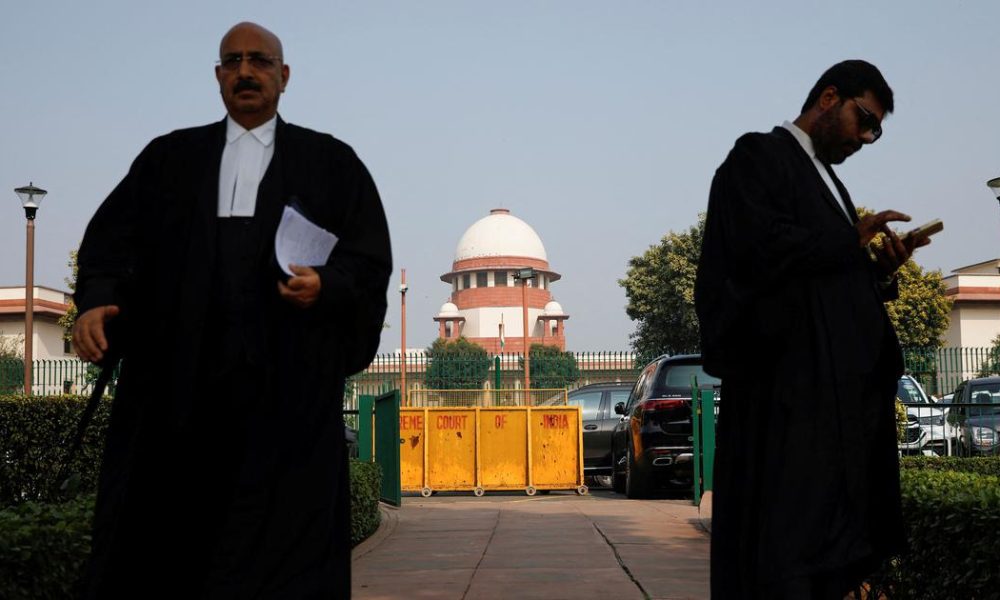
The Supreme Court of India has taken a decisive stance by issuing an interim order that safeguards the rights of individuals participating in peaceful protests. In a ruling on Sunday, the court emphasized that citizens must not face illegal detentions unless mandated by law. This order comes in the wake of protests demanding the resignation of Chief Election Commissioner Gyanesh Kumar, where demonstrators expressed concerns over the integrity of the electoral system.
As part of its directive, the apex court ordered that metro and railway services should operate normally, and internet connectivity must remain uninterrupted, in accordance with existing laws. Additionally, the court instructed authorities to allow free movement for the public and traffic in the national capital, New Delhi. A bench comprised of Justices Joymalya Bagchi and V Mohana was presiding over the case, which included multiple petitions challenging the unlawful detentions and the restrictions imposed on public transport during the protests.
During the proceedings, lawyers representing the protesters highlighted serious allegations against the police, claiming that individuals were detained beyond the designated zones where gatherings were prohibited. Reports indicated that internet services were suspended and legal professionals faced obstructions while attempting to fulfill their duties. Advocate Menaka Guruswamy, one of the petitioners, raised a pivotal question about whether a de facto emergency had been declared, as young citizens took to the streets believing that the current electoral framework was compromised and lacked fairness.
Furthermore, Advocate Kapil Sibal addressed the court, asserting that demonstrators were being apprehended not only within the restricted areas but also from nearby trains and locations outside the four-kilometer perimeter specified by prohibitory orders. Solicitor General Tushar Mehta defended the government’s actions, suggesting that the measures taken were necessary for maintaining public order.
The Supreme Court’s intervention underscores a critical moment in India’s democratic fabric, as it seeks to balance the state’s responsibility for law and order with the citizens’ right to peaceful assembly and protest. The ongoing discussions around electoral reforms and the integrity of the electoral process continue to evoke strong public sentiments, reflecting a broader concern among the populace about democratic accountability in the country.
Source: scroll.in






No Comment! Be the first one.