

Delhi Police Detain Journalist Ayush Tiwari Amid Protest Outside Rouse Avenue Court
In a recent incident highlighting tensions between law enforcement and press freedom, journalist Ayush Tiwari from Scroll was detained by the Delhi Police during a protest outside the Harkishan Singh...

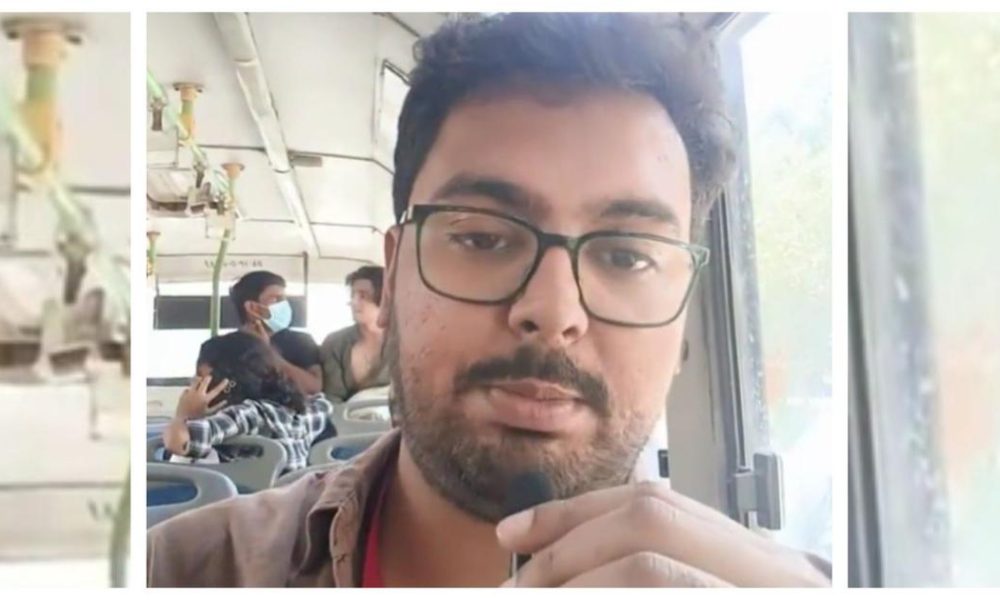
In a recent incident highlighting tensions between law enforcement and press freedom, journalist Ayush Tiwari from Scroll was detained by the Delhi Police during a protest outside the Harkishan Singh Surjeet Bhawan, located near the Rouse Avenue Court in Central Delhi. The incident occurred around 11:10 AM when a group of approximately 60 individuals, primarily students affiliated with the Communist Party of India (Marxist) and the Students’ Federation of India, marched in solidarity from the Bharatiya Janata Party’s office on Deendayal Upadhyay Marg.
The peaceful procession aimed to draw attention to various socio-political issues, yet it was met with a heavy police presence. As the protesters attempted to reach their destination, police began detaining individuals, leading to chaotic scenes as demonstrators sought refuge within the Bhawan. Eyewitnesses reported that while the police did not engage in violent confrontations, their aggressive tactics included dragging protesters away from the gates and blocking their access.
Ayush Tiwari, equipped with his press credentials, was filming the unfolding events when he found himself confronted by police officers. Despite presenting his press card to identify himself as a journalist, he was met with skepticism. According to Tiwari, an officer dismissed his credentials with the remark, “Everybody claims to be a journalist these days, you are no different.” This incident raises critical questions about the challenges faced by journalists in the field, particularly in politically charged environments.
Tiwari’s experience sheds light on a broader concern regarding media freedom in India, a topic that has gained significant attention in recent years. Journalists often find themselves in precarious situations while covering protests and dissent, as authorities sometimes view them as obstacles rather than facilitators of information dissemination. The aggressive stance taken by law enforcement against media personnel can have chilling effects on journalistic practices, raising alarms about the state of democracy in the country.
The lack of visible identification on the police officers involved in Tiwari’s detention further complicates the issue, as accountability becomes difficult in such scenarios. As the protest continued with police detaining those within reach, the incident underscores the delicate balance between maintaining public order and protecting civil liberties, including the rights of both protesters and journalists. As India grapples with its democratic ideals, the interplay between law enforcement and the media will likely remain a focal point of discussion in upcoming debates around free speech and dissent.
Source: scroll.in





No Comment! Be the first one.