

Bengali Muslims Face Growing Alienation in India Amidst Rising Suspicion
Recent reports illustrate a troubling trend in India, where the mere identification as a Bengali-speaking Muslim has become a cause for alarm among state authorities. Amidst rising political...

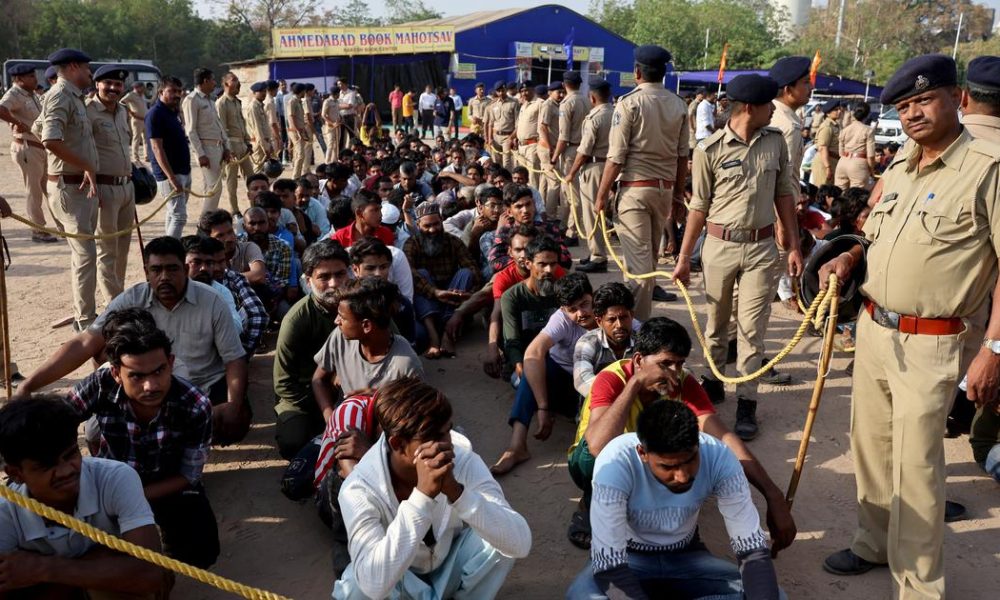
Recent reports illustrate a troubling trend in India, where the mere identification as a Bengali-speaking Muslim has become a cause for alarm among state authorities. Amidst rising political discourse surrounding ‘ghuspetiya’—or infiltrators—and unfounded fears of demographic shifts, individuals belonging to this ethno-linguistic group are increasingly viewed as outsiders in their own homeland.
This phenomenon has manifested in the form of widespread detentions and deportations across the country. In a recent incident in Bengaluru, a police operation targeted over 3,000 Bengali Muslim waste workers, as part of a crackdown on purportedly unauthorized migrants. Surprisingly, only 31 of those detained were determined to be actual Bangladeshi nationals, leading to their deportation back to West Bengal for further transfer to Bangladesh.
Similarly, in Chhattisgarh, authorities detained 23 workers from West Bengal, including one Hindu and 22 Muslims, under suspicions of being illegal migrants. This pattern of suspicion and detention has affected many, including a Muslim woman from North 24 Parganas, West Bengal, who was apprehended and deported to Bangladesh earlier this summer, highlighting the expanding reach of this trend.
What these developments reveal is not just a selective enforcement of immigration laws but a worrying narrative that frames Bengali-speaking Muslims as potential threats. The political climate has fueled an atmosphere of distrust, leading to significant repercussions for marginalized workers who contribute to various sectors across India.
This trend, which appears to have escalated since last summer, has seen thousands of Bengali Muslim workers detained and hundreds deported, often without any formal legal process. The continuing marginalization raises serious questions about the implications for social cohesion and the rights of individuals who have longstanding ties to their communities yet are suddenly rendered outsiders.
Source: scroll.in







No Comment! Be the first one.