

Sumit Sarkar: A Historian’s Legacy Beyond Conventional Boundaries
Sumit Sarkar, a distinguished historian who passed away recently in Delhi, profoundly influenced the field of history in India. Born in Calcutta in 1939, Sarkar’s extensive scholarly journey...

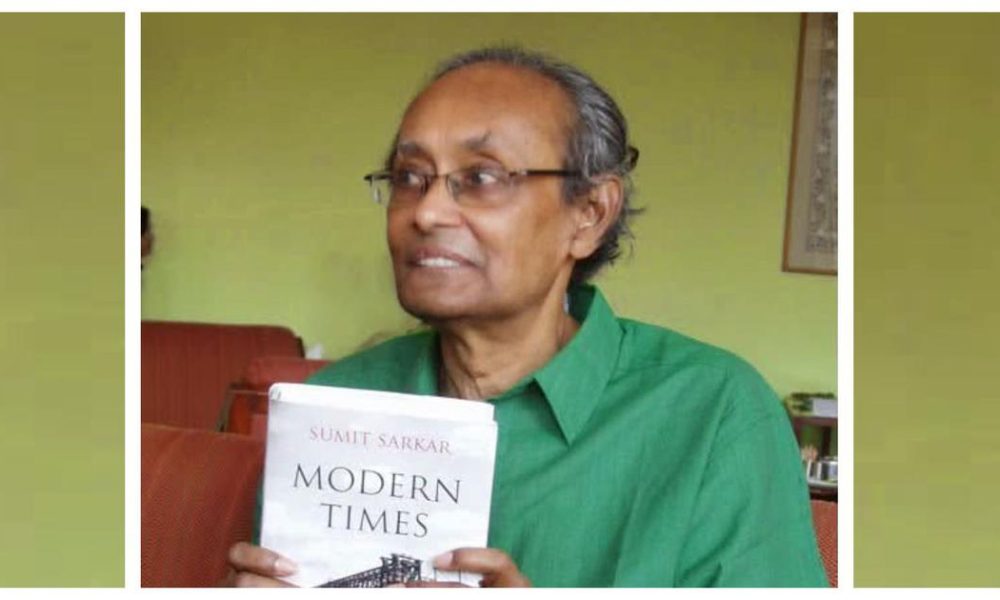
Sumit Sarkar, a distinguished historian who passed away recently in Delhi, profoundly influenced the field of history in India. Born in Calcutta in 1939, Sarkar’s extensive scholarly journey reflects a deep commitment to exploring the complexities of Indian history beyond the simplistic narratives often imposed by ideological frameworks.
In a poignant essay reflecting on his intellectual pilgrimage, Sarkar articulated a sentiment shared by many historians in India: “So far, we Indian historians have written the histories that we wanted to write, following no agenda but our own. That seems to be a fast-vanishing luxury.” This statement underscores the challenges historians face as external pressures increasingly shape historical narratives.
Sarkar’s career was marked by his confrontation with three dominant ideological currents that sought to define historical discourse in India. The first was the rigid Marxist perspective, prevalent in his native region, which interpreted history primarily through an economic lens. Sarkar, whose father was also a historian and a member of the Communist Party of India, was acutely aware of this approach’s limitations.
The second ideological influence was the rise of post-modernism and post-colonialism. These movements emphasized the fragmented nature of history and the relativity of cultural narratives, focusing more on textual analysis than the lived experiences of ordinary people. Sarkar’s insights often diverged from this viewpoint, as he believed it undermined a more holistic understanding of historical events.
The third significant challenge Sarkar faced came from the religious majoritarianism propagated by the Sangh Parivar, which aimed to glorify Hindu narratives while marginalizing Muslim contributions to India’s history. This ideological stance gained traction in the 1990s, leading to a skewed portrayal of India’s diverse past. Sarkar’s resistance to this Manichaean narrative showcased his commitment to a more inclusive and truthful representation of history.
Even within the Subaltern Studies collective, where he was a prominent figure, Sarkar maintained a critical distance from the prevailing “pomo-poco” discourse. He recognized the shortcomings of these theories in addressing the complexities of historical experience. His work consistently sought to reclaim the voices of those who had been silenced by dominant historical narratives, advocating for a nuanced understanding of India’s multifaceted history.
As we reflect on Sumit Sarkar’s contributions, it becomes clear that his scholarship transcended the confines of academia, influencing public discourse and historical understanding in India. His legacy serves as a reminder of the importance of independent inquiry in historiography, encouraging future generations of historians to pursue the truths of our past free from ideological constraints.
Source: scroll.in




No Comment! Be the first one.