

Golden Langur: Once Sacred, Now Endangered in Western Assam
The golden langur, renowned for its striking cream-colored fur, has long been held in reverence across various Indian cultures. Native to the tropical moist deciduous and semi-evergreen forests of...

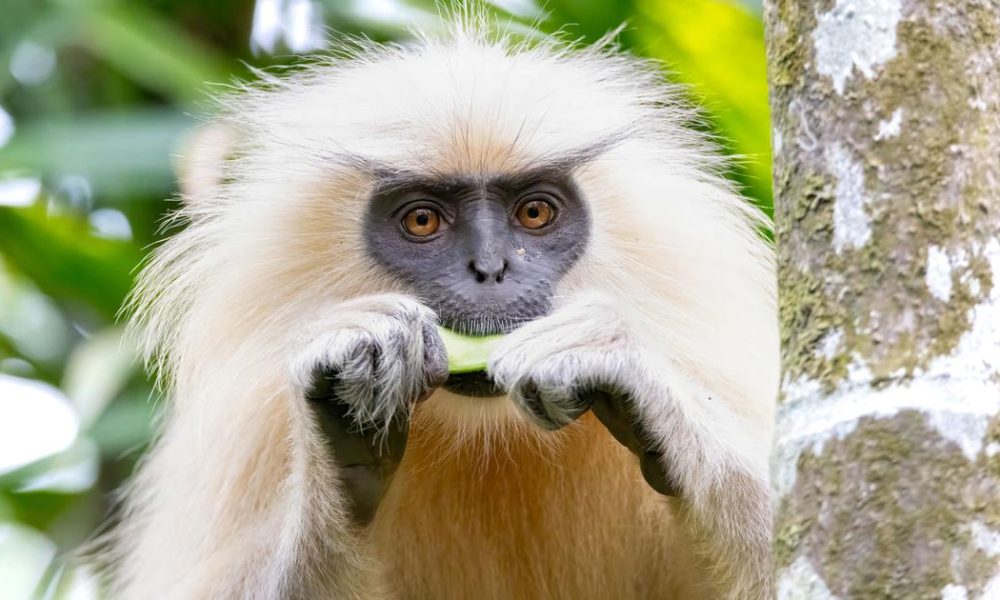
The golden langur, renowned for its striking cream-colored fur, has long been held in reverence across various Indian cultures. Native to the tropical moist deciduous and semi-evergreen forests of western Assam, as well as the sub-tropical and temperate broad-leaved areas of the India-Bhutan region, this remarkable primate is facing an alarming decline in population, now classified as endangered.
In the 19th century, naturalists such as RB Pemberton and CM Inglis first documented this unique species, describing it as the “cream colored monkey” or the “Sankosh cream langur.” However, it was EP Gee, a British tea planter and conservationist in Assam, who first proposed that this animal might represent a new species. The golden langur received its formal scientific designation in 1956, thanks to the efforts of H Khajuria from the Zoological Survey of India, who named it Presbytis geei to honor Gee’s contributions to its discovery.
This medium-sized primate weighs between 9.5 kg and 12 kg, with males being slightly larger than females. Unlike other colobines like the grey langurs, golden langurs exhibit less sexual dimorphism, making them a distinctive member of their family. Recent studies into their phylogeny and biogeography reveal that the golden langur, Trachypithecus geei, and the capped langur, T pileatus, diverged from a common ancestor found in South Asia. This divergence was influenced by geographical barriers such as the Sankosh River and the Pele La mountain range in Bhutan, which isolated certain langur populations during a climatic warming phase, leading to the evolution of the golden langur’s unique characteristics.
Despite its cultural significance and ecological role, the golden langur faces threats from habitat destruction, poaching, and human encroachment. Conservation efforts are critical to preserve the remaining populations and their habitat. Local communities and environmental organizations have started initiatives to protect these monkeys, emphasizing the importance of their preservation not just for biodiversity, but also for the cultural heritage of the region. The plight of the golden langur serves as a stark reminder of the fragility of our natural ecosystems and the urgent need to take action to safeguard our wildlife.
As efforts ramp up to protect this endangered species, raising awareness about its significance is crucial. The golden langur is not merely a symbol of Assam’s rich biodiversity but also an emblem of the deep connection between nature and culture that has flourished in India for centuries. Its survival hinges on our collective commitment to environmental conservation and sustainable practices.
Source: scroll.in






No Comment! Be the first one.