

The Mughal Emperors: Masters of Multicultural Fashion and Identity
The Mughal emperors, particularly Jahangir, are often celebrated for their artistic sensibilities, which extended beyond mere aesthetics to embrace a complex cultural identity. In his memoir, the...

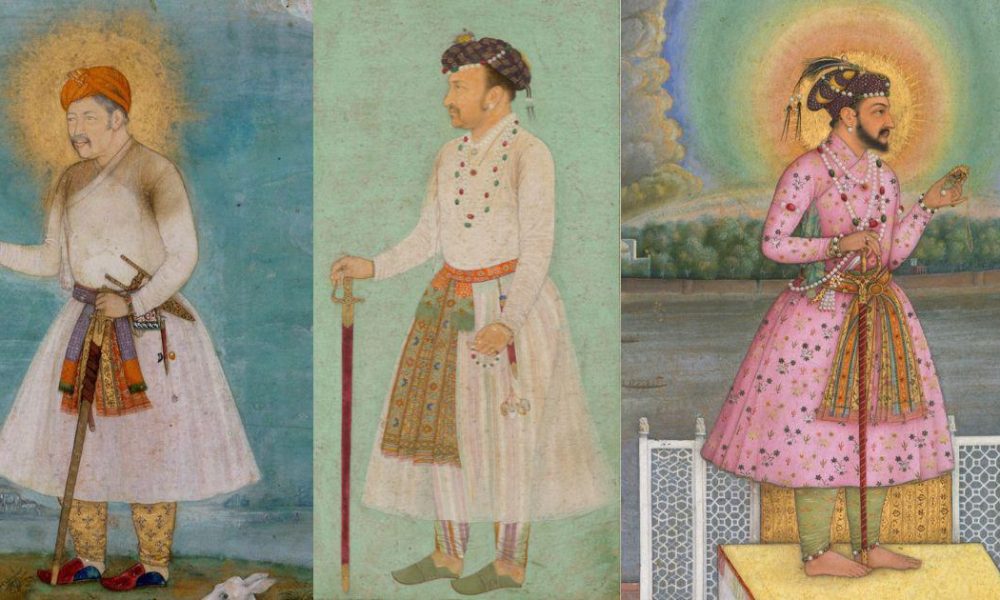
The Mughal emperors, particularly Jahangir, are often celebrated for their artistic sensibilities, which extended beyond mere aesthetics to embrace a complex cultural identity. In his memoir, the Tuzuk-i Jahangiri, Jahangir vividly illustrates his love for opulence, showcasing an affinity for luxurious items that reflect both his personal taste and the rich cultural tapestry of India. His portraits frequently include items such as jade wine cups, intricately designed daggers, and exquisite textiles.
Among the many striking elements in his depictions are the dual textile sashes, known as patkas, that adorn his torso. One is characterized by a bandhani tie-dye pattern, deeply rooted in Rajput traditions, while the other features intricate geometric designs reflective of Islamic artistry. This combination serves as a powerful visual representation of Jahangir’s dual heritage, tracing back to his father, the eminent Mughal emperor Akbar, and his mother, Harkha Bai, a Rajput princess. Through this sartorial choice, Jahangir exemplifies a melding of cultural influences that was not merely incidental but a significant aspect of Mughal identity.
The phenomenon of blending cultural dress styles during the Mughal era was not an isolated development but rather a continuation of historical exchanges that had been underway for centuries. While the Mughal courts are often credited with elevating this syncretic aesthetic, art historian Finbarr Barry Flood, in his book Objects of Translation, delineates how such sartorial fusions began as early as the 10th century. He highlights that medieval elites in northern India engaged in what he terms “cultural cross-dressing,” where Muslim elites adopted the luxurious garments favored by Hindu and Buddhist royalty. This cultural exchange created a dynamic fashion landscape that transcended religious boundaries.
Moreover, the adoption of Turko-Persian attire by Hindu and Buddhist elites was equally significant, symbolizing their cosmopolitan outlook and sophisticated tastes. This reciprocal assimilation of fashion underscored a shared cultural dialogue that enriched the social fabric of medieval India. The Mughal period can thus be seen as a zenith of this sartorial dialogue, where emperors like Akbar and Jahangir not only embraced but celebrated their multifaceted identities.
In conclusion, the Mughal emperors’ embrace of a syncretic sartorial sensibility reflects a broader cultural phenomenon in which identities were fluid and interconnected. The luxurious attire of Jahangir serves as a testament to an era where fashion was not just about aesthetics; it was also a powerful means of expressing one’s heritage and the complexities of cultural identity in a diverse society. This rich tapestry of cultural interplay continues to influence contemporary Indian fashion and identity today, reminding us of the historical significance of our sartorial choices.
Source: scroll.in







No Comment! Be the first one.