

Indian Students in Germany Unite Against NEET Mismanagement and Authoritarianism
On July 19, a group of Indian students gathered at the historic Brandenburg Gate in Berlin to voice their concerns over the mismanagement of the NEET-UG examination, a critical gateway for aspiring...

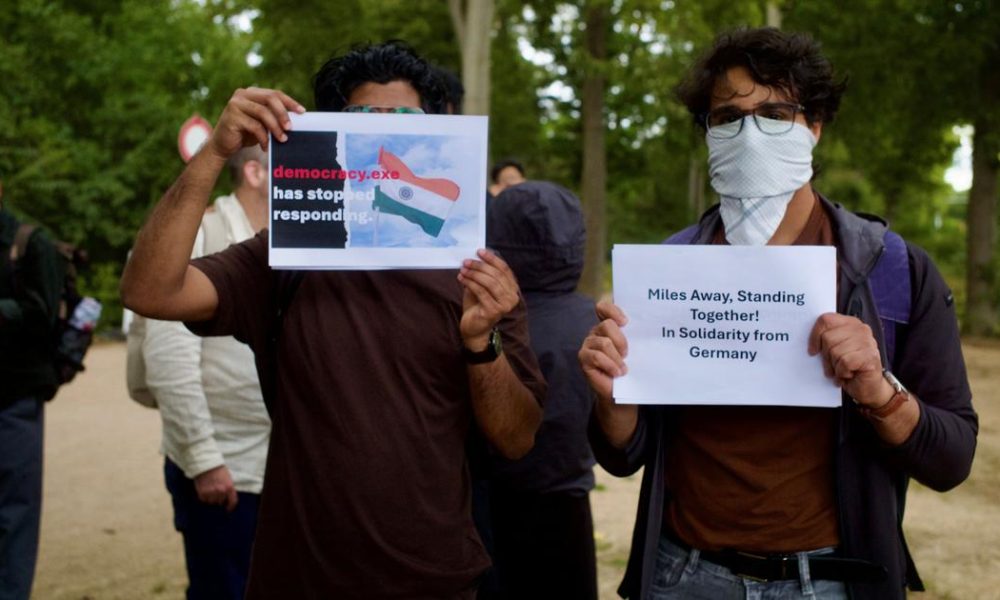
On July 19, a group of Indian students gathered at the historic Brandenburg Gate in Berlin to voice their concerns over the mismanagement of the NEET-UG examination, a critical gateway for aspiring medical students in India. This demonstration marked the beginning of a series of protests that have since spread to other German cities, including Stuttgart and Frankfurt.
The demonstrations were sparked by allegations of a test paper leak, which the students argue undermines the integrity of the examination process. However, the protests have evolved into a broader critique of what participants describe as the increasing authoritarianism within India. Avni G, one of the protesters, stated, “We are fighting the regime. We are peaceful protesters. But we want to raise bigger questions – from paper leaks to the atrocities of the government, their fascist agenda.”
Throughout the week, demonstrators have organized multiple rallies in Berlin, strategically positioning themselves at popular tourist spots such as Alexanderplatz to maximize visibility. While they intend to raise awareness, the protesters are also mindful of not causing disruption to the city’s daily life. On July 21, a significant gathering took place in front of the Indian Embassy in Berlin, where they expressed solidarity with fellow students back home. Participants engaged in reciting poetry and holding placards with powerful slogans like “Educate, Agitate, Organise,” inspired by BR Ambedkar’s call for social justice.
The protests have resonated deeply among the Indian diaspora, particularly students who feel the ramifications of policies back home even while abroad. The participation of Indian students in Germany underscores a growing trend of activism among youth who are increasingly unwilling to remain silent about what they see as injustices. The phrase “Hum Dekhenge,” from a famous poem by Faiz Ahmed Faiz, was also prominently featured, symbolizing their determination to see change.
The protests highlight the interconnectedness of global Indian communities and the solidarity that transcends borders when it comes to issues of educational integrity and governance. As the demonstrations continue, they serve as a reminder of the power of youth activism and the impact of grassroots movements in challenging the status quo.
Source: scroll.in







No Comment! Be the first one.