

Civil Society Urges Activist Sonam Wangchuk to End Hunger Strike Amid Ongoing Protests
In a heartfelt appeal, over 1,800 members of the civil society have urged prominent activist Sonam Wangchuk to conclude his hunger strike, which he has been observing in Delhi since June 28. This...

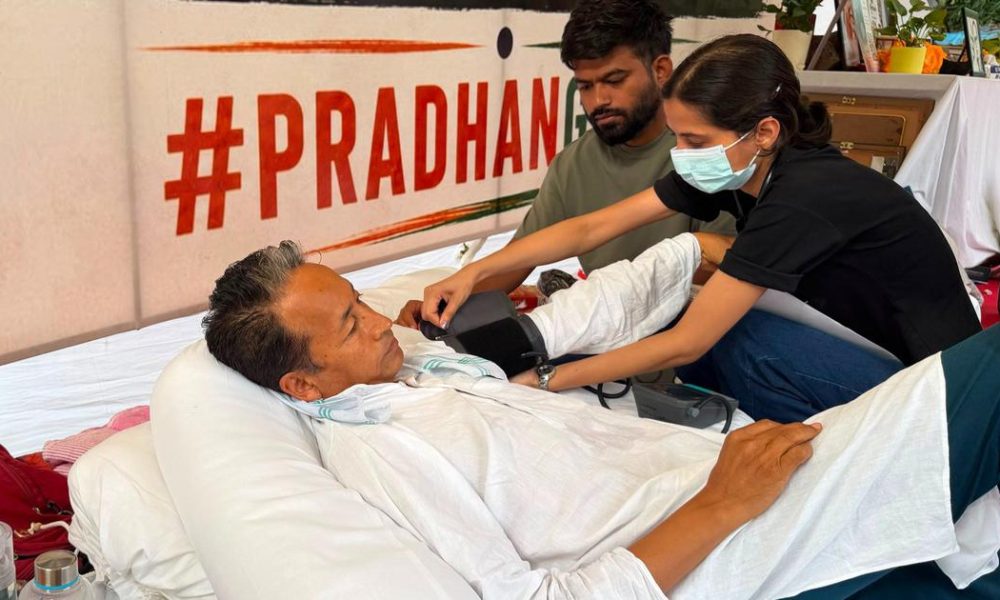
In a heartfelt appeal, over 1,800 members of the civil society have urged prominent activist Sonam Wangchuk to conclude his hunger strike, which he has been observing in Delhi since June 28. This protest is part of the Cockroach Janta Party’s campaign demanding the resignation of Union Education Minister Dharmendra Pradhan, citing mismanagement in the administration of competitive examinations.
Wangchuk’s fast has captured significant attention, drawing support from a diverse group of individuals including academics, artists, and fellow activists. An open letter addressed to Wangchuk expressed concern not only for his well-being but also emphasized the urgent need for dialogue with the government. The letter highlighted the mounting health issues Wangchuk is facing, with campaign founder Abhijeet Dipke revealing that after 17 days of fasting, Wangchuk is experiencing significant muscle loss and is in severe pain.
Dipke described his desperate plea for Wangchuk to end the fast, recalling Wangchuk’s poignant question regarding the government’s reluctance to engage with the protesters. Those who signed the letter included notable figures such as actors Naseeruddin Shah and Ratna Pathak Shah, acclaimed author Arundhati Roy, and prominent academics like Nivedita Menon and Jean Drèze, along with seasoned activists Lalita Ramdas and Kavita Srivastava.
The signatories underscored their support for the protest while expressing alarm at the deteriorating health of Wangchuk. They criticized the Union government, asserting that it lacks compassion and a moral compass in addressing the genuine concerns raised by the protesters. The collective concern reflects a broader sentiment among the public regarding the handling of education-related issues in the country.
Wangchuk’s hunger strike is not just a personal sacrifice; it symbolizes the collective frustrations and demands of students and educators who feel marginalized by government policies. As the situation unfolds, the call for dialogue becomes increasingly crucial, with many hoping for a resolution that addresses the underlying issues without compromising the health and well-being of those fighting for change.
Source: scroll.in







No Comment! Be the first one.