

Supreme Court Declines Contempt Action Against Litigant Who Disrupted Hearing
In a recent session, the Supreme Court of India opted not to pursue contempt proceedings against a litigant who verbally assaulted Chief Justice Surya Kant and disrupted court proceedings by throwing...

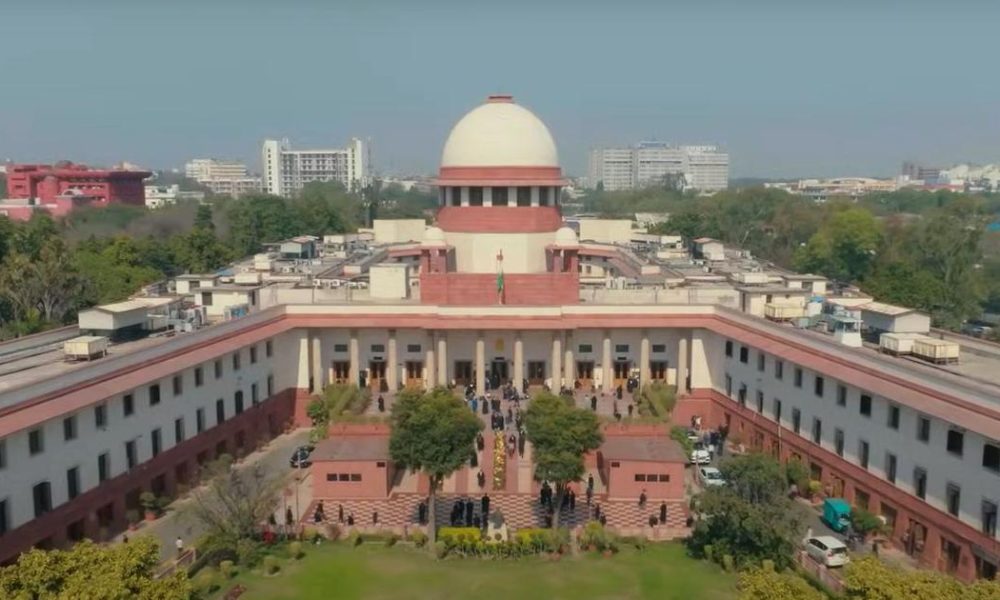
In a recent session, the Supreme Court of India opted not to pursue contempt proceedings against a litigant who verbally assaulted Chief Justice Surya Kant and disrupted court proceedings by throwing documents. The incident unfolded during a hearing when the self-represented litigant, identified as Prabal Pratap, expressed his demands in an aggressive manner, instructing the Chief Justice to register a First Information Report (FIR) against a police official from Lucknow.
As the hearing commenced, Pratap’s tone was combative, asserting, “Mr. judicial servant, I order you to order the registration of an FIR.” His statement drew immediate attention from Justice KV Viswanathan, who questioned, “You are ordering us?” This exchange escalated as Pratap continued to throw case papers into the air, leading to his removal from the courtroom by security personnel. Although Chief Justice Kant was not part of the presiding bench, the incident highlighted a significant breach of courtroom decorum.
The bench, comprising Justices Viswanathan and Alok Aradhe, characterized Pratap’s remarks as “incoherent and unparliamentary,” indicating that his conduct was far from the expected standards of legal proceedings. However, in an unexpected turn, the justices refrained from initiating contempt proceedings against him, citing “the condition of the petitioner” as a reason. The court did not specify what this condition involved, leaving many curious about its implications.
This decision underscores the judiciary’s approach towards maintaining decorum in the courtroom while considering the individual circumstances of litigants. The bench also upheld a prior order from the Allahabad High Court, which Pratap had contested. On April 6, the High Court had dismissed his request, a ruling that he sought to challenge in the Supreme Court. This particular incident sheds light on the challenges faced by courts in managing disruptive litigants while ensuring that justice prevails.
The Supreme Court’s decision not to proceed with contempt charges may reflect a broader understanding of the complexities involved in legal disputes, especially for individuals representing themselves. As the legal community continues to engage with issues of accessibility and fairness, this case serves as a reminder of the need for respectful conduct in legal settings.
Source: scroll.in







No Comment! Be the first one.