

Climate Change Fuels Increased Forest Fires in the Himalayan Region
Forest fires in the Himalayas have traditionally been confined to the dry months between November and June. However, the emergence of out-of-season fires, particularly at higher elevations, raises...

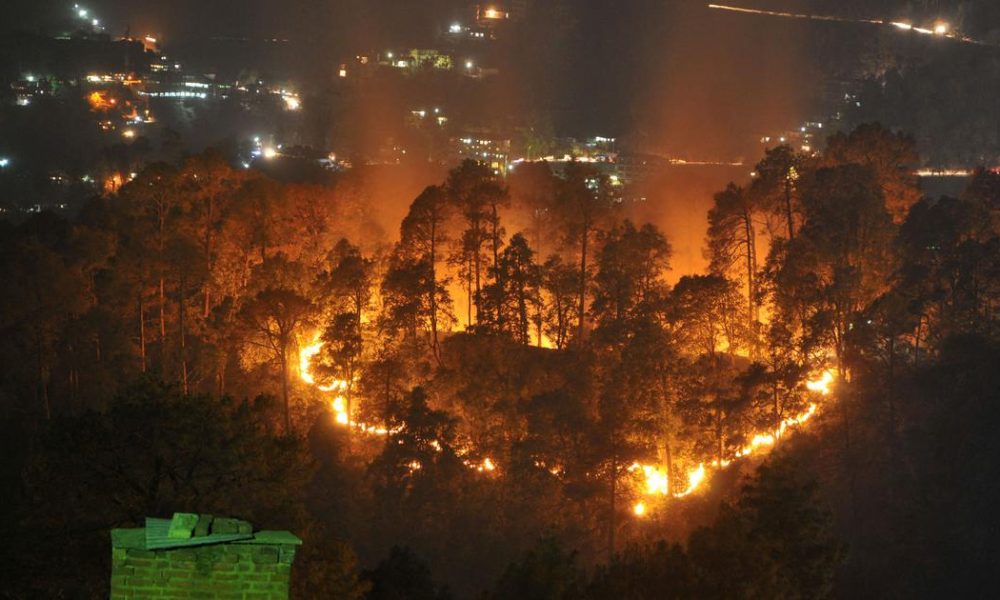
Forest fires in the Himalayas have traditionally been confined to the dry months between November and June. However, the emergence of out-of-season fires, particularly at higher elevations, raises alarms about their management amid a changing climate. Recent research conducted in the Western Himalayas sheds light on the factors contributing to these alarming developments.
The study, conducted by experts from the Forest Research Institute in Dehradun and the Indian Institute of Technology in Roorkee, highlights a troubling correlation between the rise in forest fires and a decline in plant diversity. Uttarakhand, known as the most fire-prone state in the Western Himalayas, has seen an increase in fire-dominant species as traditional flora diminishes. According to the Forest Survey of India, the Himalayan forests, including the Eastern region, are estimated to store approximately 3,273.1 million tonnes of carbon, making the impact of these fires even more significant.
Amit Kumar Verma, a senior technical officer and study author, emphasized the importance of examining a decade’s worth of data to unravel the complexities of forest fire dynamics. “Our analysis revealed that temperature appeared to be the most influential factor among various bioclimatic and anthropogenic variables,” he noted. This insight suggests that rising temperatures linked to climate change could be key drivers behind the increasing frequency of fires.
These forest fires not only threaten the delicate ecological balance of the region but also pose a risk to the substantial carbon stocks that help mitigate global warming. Fire incidents in the Himalayas can lead to the release of stored carbon, further exacerbating climate issues. The research underscores the urgent need for proactive measures to address the challenge of forest fires in this ecologically sensitive area.
In light of these findings, experts are calling for enhanced fire management strategies that take into account the changing climate. As fires become harder to predict and control, it is crucial for local authorities and communities to adapt their approaches. Public awareness campaigns about the causes and impacts of these fires could also play a vital role in safeguarding the Himalayan forests and the diverse species they harbor.
Source: scroll.in







No Comment! Be the first one.