

From a Brawl to Bloodshed: The Escalation of Naga-Kuki Tensions in Manipur
The recent ethnic conflicts in Manipur can be traced back to a seemingly trivial incident: a drunken altercation involving four young men in Ukhrul district on February 7. This seemingly innocuous...

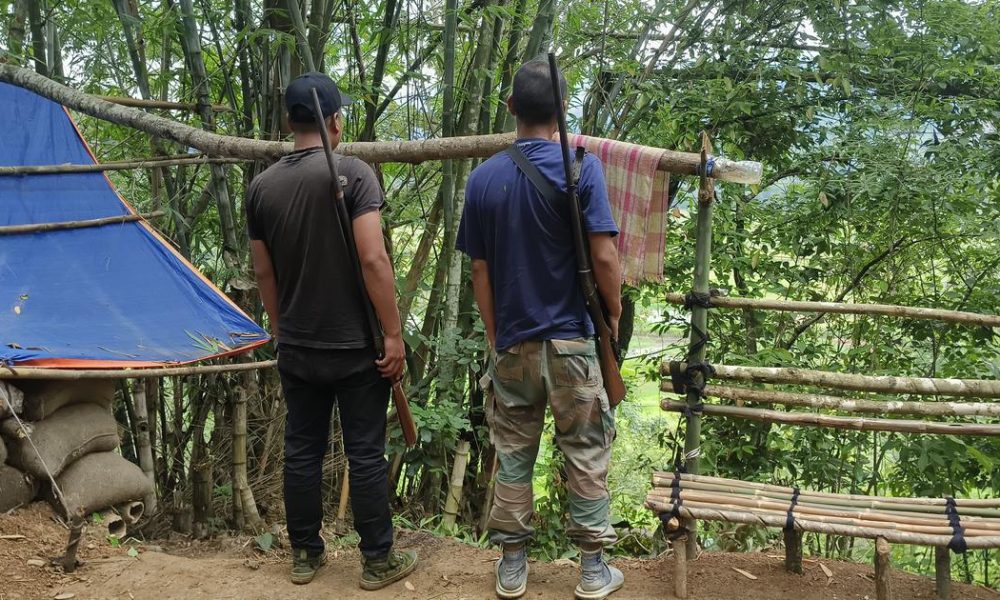
The recent ethnic conflicts in Manipur can be traced back to a seemingly trivial incident: a drunken altercation involving four young men in Ukhrul district on February 7. This seemingly innocuous brawl quickly escalated into a series of violent confrontations that have now deeply entrenched the fault lines between the Tangkhul Naga and Kuki communities in the region.
Initially, the fight involved two members from the Tangkhul Naga community and two Kukis. In what would have been a routine resolution with the intervention of village leaders, this incident spiraled out of control when, a day later, an abandoned Kuki house was set on fire in retaliation. This act of arson ignited a wave of violence, culminating in the destruction of approximately 74 homes belonging to both communities over the following days. The small town of Litan witnessed rampant fires and gunfights, marking a significant escalation in hostilities.
These clashes are not isolated events; they occurred against the backdrop of already heightened tensions in Manipur, where ethnic divisions became painfully pronounced earlier in the year during violent confrontations between the Kukis and Meitei communities, resulting in over 260 fatalities. The ongoing strife represents a troubling trend in a state that has seen a ‘partition’ of its society along ethnic lines, with groups increasingly polarized.
Following the initial violence in Litan, the situation worsened with the emergence of killings. The first casualties were two Kukis, whose bodies were discovered in the hills surrounding the town. As violence continued to escalate, two Naga men were later found shot dead on the highway linking Ukhrul to Imphal, further entrenching the cycle of retaliatory violence. This grim sequence of events highlights the precariousness of peace in a region already fraught with historical grievances.
As the situation continues to unfold, the question remains whether local leaders and the government can successfully mediate a resolution to this ethnic conflict that threatens to engulf not just Ukhrul, but potentially other parts of Manipur as well. Community leaders must engage in dialogue to mend the schisms that have only deepened over the past few months, lest the region fall further into chaos. The path to reconciliation will be challenging, but it is essential for restoring peace and stability in a state that has suffered far too long from ethnic strife.
Source: scroll.in







No Comment! Be the first one.