

Legal Battle Erupts Over Meat Ban in Amritsar Amidst Longstanding Controversies
In a significant development in Amritsar, Punjab, a ban on meat sales has sparked a legal dispute that highlights the intersection of commerce, culture, and governance. Rajiv Gulati, a fishmonger...

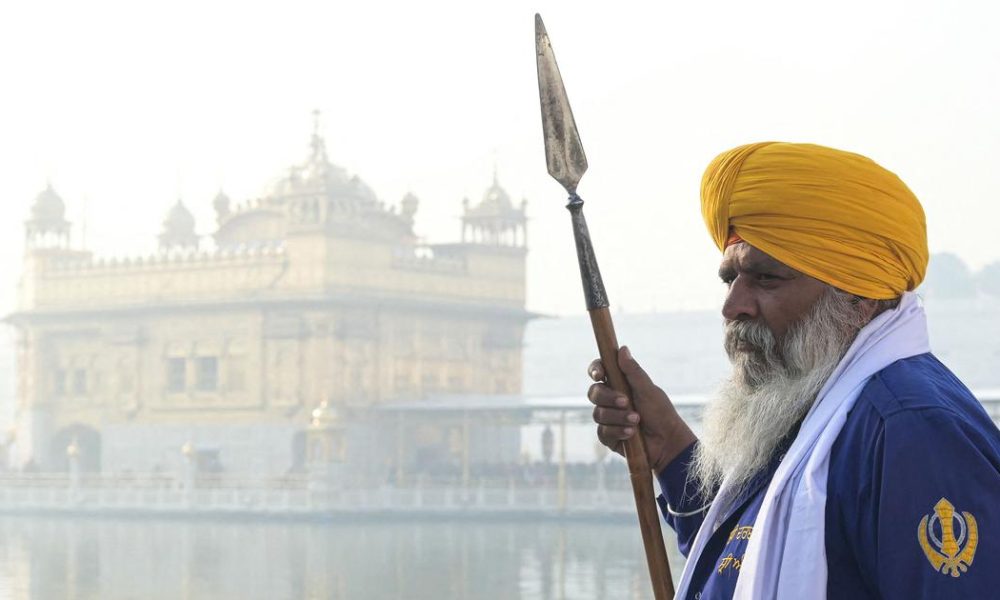
In a significant development in Amritsar, Punjab, a ban on meat sales has sparked a legal dispute that highlights the intersection of commerce, culture, and governance. Rajiv Gulati, a fishmonger whose family has operated a shop in the Hall Gate Fish Market for over five decades, found his livelihood abruptly halted when local authorities sealed his business on April 20, citing a recent government directive.
The directive, issued by the Punjab government, prohibits the sale of meat, alcohol, cigarettes, and tobacco within the walled area surrounding the historic Golden Temple, declared a ‘holy city’ last November by the Aam Aadmi Party (AAP) government. This decision has far-reaching implications, impacting more than 250 small businesses, including meat vendors and food carts, as many owners like Gulati now face unprecedented financial strain.
“This shop has been in my family since my grandfather’s time. We have not only lost our source of income but also our identity as traders in this community,” lamented the 39-year-old Gulati. He criticized the government for failing to provide alternative arrangements for affected businesses, which he says has left many families in dire circumstances.
In response to the closure, Gulati filed a petition in the Punjab and Haryana High Court on May 29, challenging the legality of the government’s action. His attorney, Vikas Chathrath, argues that the notifications enforcing the ban lack statutory support and question the state’s authority to designate areas as ‘holy cities’ while restricting commerce. This legal challenge could set a precedent for how local governance interacts with traditional business practices in culturally significant areas.
The debate surrounding the meat ban is not new; it ties back to broader discussions about secularism, cultural identity, and the role of government in religious spaces. Many residents are divided on the issue, with some supporting the ban as a means to preserve the sanctity of the holy sites, while others view it as an infringement on personal freedoms and economic rights.
As this case unfolds in the courts, it encapsulates the complexity of balancing religious sentiments with the practicalities of modern commerce in India, a nation continually navigating its rich cultural tapestry against the demands of contemporary governance. The outcome could have significant implications for similar regulations in other areas across the country.
Source: scroll.in





No Comment! Be the first one.