

Ancient Whale Graveyard Discovered in Indian Ocean: A 5.3 Million-Year-Old Ecosystem Unveiled
In a remarkable discovery, a team of researchers has unearthed a colossal ancient whale necropolis in the depths of the Indian Ocean, specifically within the Diamantina Zone. This site, dating back...

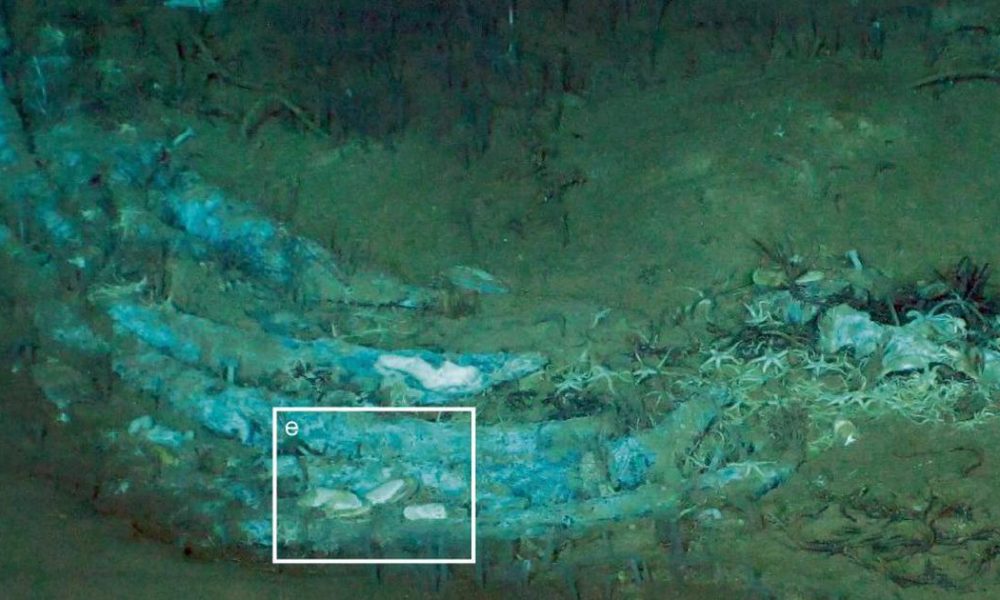
In a remarkable discovery, a team of researchers has unearthed a colossal ancient whale necropolis in the depths of the Indian Ocean, specifically within the Diamantina Zone. This site, dating back an astonishing 5.3 million years, is believed to be among the deepest known ecosystems representing ‘whale falls’—an area where the remains of deceased whales create a unique environment for deep-sea scavengers.
When a whale passes away, its carcass often rises to the ocean’s surface, drawing in various predators, including sharks. As time progresses, the remains become weathered and sink to the ocean floor, serving as a feast for deep-sea organisms. Despite the scientific significance of these natural occurrences, the documentation of such whale falls has remained limited and fragmented. This discovery thus marks a significant contribution to marine biology and paleontology.
The research, spearheaded by Xiaotong Peng from the Chinese Academy of Sciences, was conducted during a specialized diving mission in February 2023. Utilizing the submersible ‘Fendouzhe’, the team successfully located extensive whale skeletons and fossils that were partially buried under sediment on the seafloor. In the aftermath of this initial dive, researchers undertook 32 additional dives over the subsequent month, meticulously mapping the vast expanse of the necropolis.
This ancient burial ground not only provides insight into the past ecosystems but also sheds light on the evolutionary history of marine life. The findings are expected to help scientists understand the environmental and biological factors that govern the ocean’s depths, especially concerning the role of large marine mammals in the marine food web.
The discovery of this whale necropolis is significant not just for its age and size but also for the light it sheds on the ecological dynamics of the deep-sea ecosystem. As researchers continue to study the site, the implications for marine biodiversity conservation and the understanding of oceanic life during historical epochs become increasingly important, especially in the context of ongoing climate change.
Source: scroll.in







No Comment! Be the first one.