

Nighttime Light Pollution: Kerala’s Kites Adapt to New Hunting Habits
Polycarp Joseph, an avid ornithologist and district head for the Kerala State Annual Heronry Survey, has been dedicated to tracking bird populations in Kerala’s Kollam district since 2019. His...

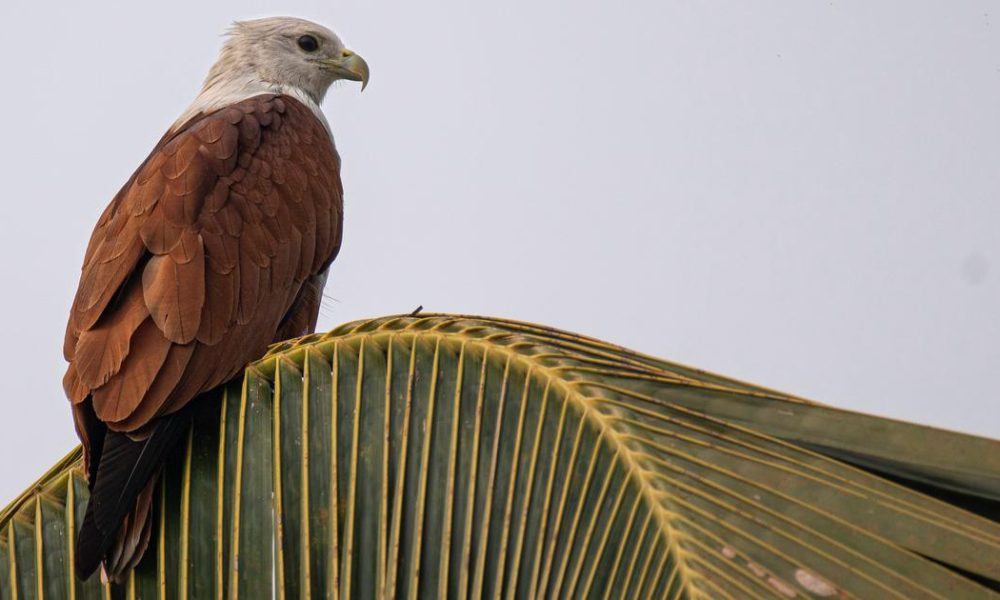
Polycarp Joseph, an avid ornithologist and district head for the Kerala State Annual Heronry Survey, has been dedicated to tracking bird populations in Kerala’s Kollam district since 2019. His commitment to this cause led him to make annual visits to the Shaktikulangara and Vaddy fishing harbours, where he meticulously counts active nests of little egrets, a species native to the region. Recently, however, Joseph has expanded his observations to include the impact of nighttime light pollution on avian behavior, particularly among the brahminy kites.
During one of his nocturnal excursions to the Vaddy fishing harbour, Joseph made a surprising discovery: a group of brahminy kites, known for their distinct white heads and scavenging habits, were actively hunting well after dark. Typically diurnal, these raptors have adapted their behavior to exploit the bright LED lights illuminating the harbour area, akin to a floodlit stadium. The artificial lights allow the kites to see potential prey, making them more adept at scavenging fish discarded by local fishermen.
On February 5, 2024, between 11 PM and 12:30 AM, Joseph documented the kites engaging in remarkable aerial maneuvers above the illuminated harbour. He observed them flying in tight circles, diving down to catch fish from boats, and snatching leftovers from fishers’ catches. This behavior raises questions about how artificial lighting is influencing wildlife, particularly species that have traditionally relied on daylight for activity.
The implications of this finding are significant, not just for the brahminy kites, but for broader ecological dynamics in the region. Light pollution has been a growing concern worldwide, and its effects on wildlife are becoming more apparent. In Kerala, where fishing harbours are often bustling with activity, the nighttime environment has changed dramatically due to artificial lighting. Joseph’s observations suggest that the brahminy kites are exploiting these conditions, indicating a potential shift in their natural foraging behavior.
As urbanization and industrial activities continue to expand, understanding the impact of artificial light on wildlife is critical for conservation efforts. Researchers like Joseph emphasize the need for further studies to assess how these changes may affect bird populations and ecosystems in the long term. With Kerala being home to a diverse range of avian species, the adaptation of the brahminy kites could signal broader changes in feeding practices across various birds in response to human-induced environmental alterations.
Source: scroll.in







No Comment! Be the first one.