

Shift in US-China Relations Impacts Quad’s Role in Global Dynamics
On May 16, a significant milestone was acknowledged by leaders of the United States and China, marking a substantial transformation in their bilateral relations. President Donald Trump and President...

On May 16, a significant milestone was acknowledged by leaders of the United States and China, marking a substantial transformation in their bilateral relations. President Donald Trump and President Xi Jinping recognized what has been evolving for a considerable period: a new equilibrium in economic and military capabilities between the two nations. This pivotal moment can be described as a newfound ‘constructive strategic stability’ according to Beijing and as a ‘strategic stability point’ by US Secretary of State Marco Rubio.
For the first time in decades, the United States has admitted that China has reached parity with it in essential spheres of influence. This recognition establishes US-China relations as a cornerstone of global order and international security, signifying a shift in how both countries will interact moving forward. The implications of this new reality are profound, as it empowers China to assert its interests more forcefully, particularly concerning Taiwan. This adjustment has led to a temporary cooling of confrontations, ushering in a period of managed competition in the Indo-Pacific region.
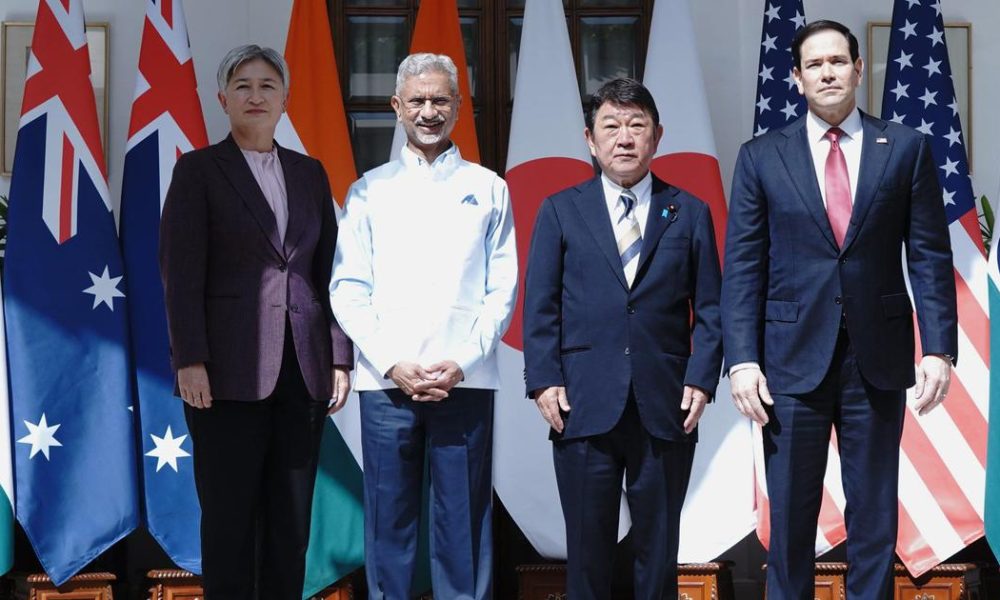
In light of this evolving landscape, the role of the Quadrilateral Security Dialogue (Quad)—comprising Australia, India, Japan, and the United States—is undergoing a reevaluation. Initially established in 2007 to counterbalance Chinese influence, the Quad’s function now appears to be taking on a more supportive and secondary role. During the recent Quad Foreign Ministers meeting held in Delhi on May 26, 2026, Secretary of State Rubio outlined a new direction for the alliance, emphasizing the need for its members to assist in accessing critical minerals, boosting US energy exports, and enhancing maritime surveillance and port infrastructure throughout the Indo-Pacific.
This shift reflects a broader strategy where the United States seeks to harness the capabilities of its allies to address economic and security challenges posed by China. The Quad nations are being called upon to play a pivotal role in securing supply chains and enhancing regional stability, thus solidifying their contributions to the overarching goals of the US in the Indo-Pacific. While the original intent of the Quad was to act as a counterweight to Chinese dominance, it now seems to focus on collaborative efforts that align with US strategic interests.
As the geopolitical landscape continues to evolve, India’s position within the Quad becomes increasingly significant. New partnerships and collaborations are essential for India to navigate this complex environment while safeguarding its interests. The country must balance its relationships, which include maintaining strong ties with both the US and China, to ensure its regional and global standing remains robust amid the shifting dynamics.
Source: scroll.in







No Comment! Be the first one.