

Rajasthan High Court Overturns Teacher’s Suspension Over Social Media Comments About Minister
In a significant ruling, the Rajasthan High Court has annulled the suspension of Lal Singh Chouhan, a government school teacher, who faced action for allegedly posting disparaging remarks about a...

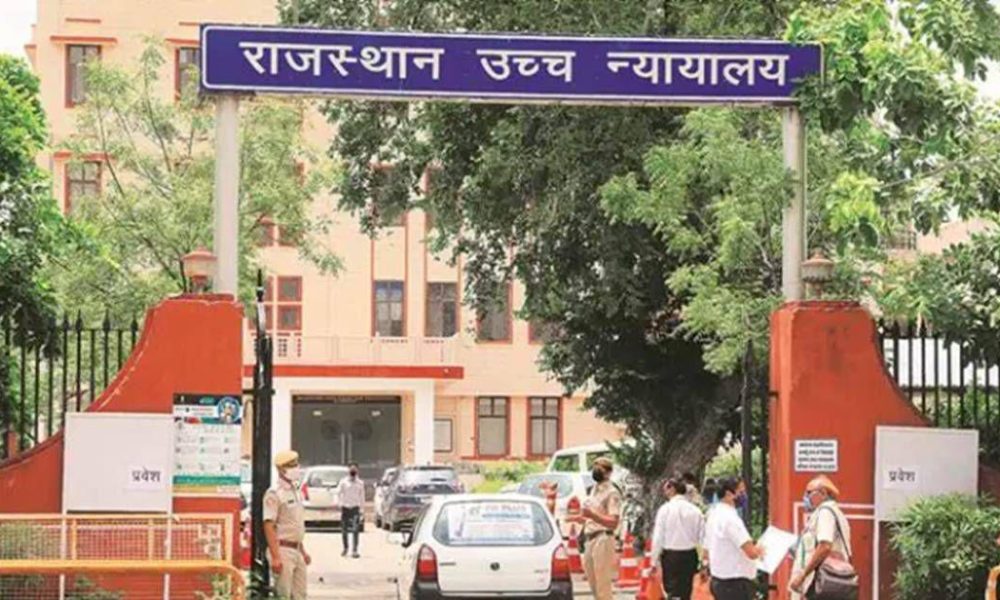
In a significant ruling, the Rajasthan High Court has annulled the suspension of Lal Singh Chouhan, a government school teacher, who faced action for allegedly posting disparaging remarks about a minister on social media. The decision was delivered by Justice Farjand Ali on May 12, asserting that the grounds for Chouhan’s suspension were not legally justifiable.
The controversy began when the Banswara district education officer suspended Chouhan on September 23, citing a chargesheet that accused him of making inappropriate comments on WhatsApp. The charges claimed that Chouhan’s posts not only damaged the reputation of the minister involved but also cast a shadow on the education department itself, as reported by Live Law.
During the proceedings, Chouhan contended that the administrative action taken against him was arbitrary, exceeded the jurisdiction of the education officer, and lacked any substantiation under the Rajasthan Civil Services Classification, Control and Appeal Rules of 1958. The court found merit in Chouhan’s arguments, highlighting the need for adherence to established legal frameworks when considering suspensions.
Justice Farjand Ali remarked that even if the allegations against Chouhan were taken at face value, they did not warrant sidestepping the mandated protocols governing such disciplinary actions. The judge emphasized that the notion of damaging a minister’s reputation does not grant authorities the unrestricted power to suspend employees without following due legal process. He further clarified that administrative convenience or subjective interpretations cannot replace the necessary legal requirements.
This ruling sheds light on the broader implications of free speech and the protection of public servants in India, especially concerning expressions made on social media. The court’s decision reinforces the principle that statutory functions must operate within the confines of the law, rejecting any notion of arbitrary authority akin to that of a ruler overseeing a domain. As the landscape of communication continues to evolve with digital platforms, this case could set a precedent for how similar situations are handled in the future, emphasizing the importance of due process in administrative actions.
Source: scroll.in







No Comment! Be the first one.