

Nepal Stresses Bilateral Approach to Border Disputes with India, Rejects Third-Party Mediation
Nepali Foreign Minister Shisir Khanal reaffirmed on Sunday that Nepal is committed to resolving its border disputes with India through direct bilateral discussions, explicitly stating that the...

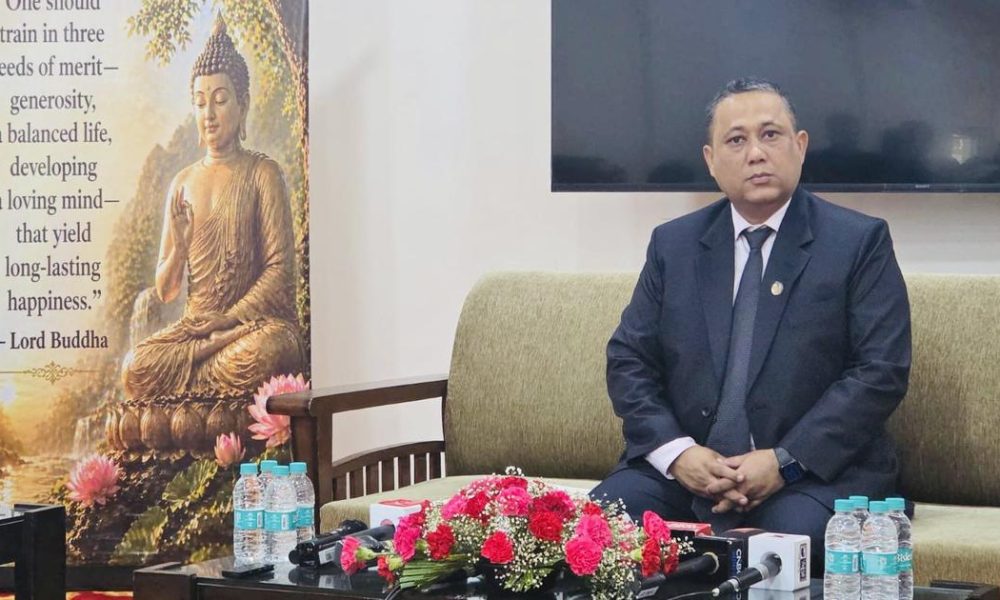
Nepali Foreign Minister Shisir Khanal reaffirmed on Sunday that Nepal is committed to resolving its border disputes with India through direct bilateral discussions, explicitly stating that the country is not seeking any third-party mediation. This declaration comes amidst ongoing tensions concerning territorial claims over the Kalapani-Limpiadhura-Lipulekh region, an area that both nations have been contesting.
Khanal made these remarks during a press conference at the Nepali embassy in New Delhi, where he emphasized Nepal’s diplomatic efforts to communicate its stance on the border issue to India. The minister noted that Kathmandu has formally articulated its claims regarding the disputed territory, which India maintains falls within its Uttarakhand state. The ongoing disagreement reflects a complex historical context, with both countries holding divergent views on the borders established during the British colonial era.
This statement also follows comments made by Nepal’s Prime Minister Balendra Shah, who indicated that Kathmandu had engaged in discussions with China and the United Kingdom about the border disputes. During a previous address, Shah remarked on the significance of UK involvement, suggesting that historical ties from the period of British India could provide context to the current territorial claims. The area in question is strategically located near the trijunction of India, Tibet, and Nepal, heightening its geopolitical importance.
In response to these developments, India’s Ministry of External Affairs has reiterated its position that there is no role for external parties in what it considers bilateral matters. Spokesperson Randhir Jaiswal highlighted that India and Nepal have established comprehensive bilateral mechanisms to handle boundary issues, emphasizing the importance of direct dialogue between the two nations.
Khanal concluded that Nepal is keen to resolve its disputes amicably and through mutual understanding, underscoring the importance of maintaining a constructive dialogue. Both countries share deep-rooted cultural and historical ties, and resolving these border issues through cooperative engagement remains crucial for their bilateral relations.
Source: scroll.in







No Comment! Be the first one.